The Beginner's Great Dilemma: Where to Start Your Musical Journey?
Deciding to learn the guitar in Lausanne is often the start of a magnificent personal adventure, a quest for expression that thrills the soul. However, from the very first chords, a fundamental question arises and sometimes curbs the enthusiasm of the beginner: is it imperative to master music theory or can one rely solely on tablature? This question is entirely legitimate. It comes up almost systematically during the first exchange with a teacher or within a music school in the region.
In this month of December 2025, the answer is no longer as clear-cut as before. Methods have evolved to place pleasure at the center of the educational process. Whether you are a parent looking for the best path for their children or an adult wishing to finally realize this dream of strumming the strings, it is essential to understand that the choice will depend mainly on your aspirations. Do you wish to explore the rigor of classical or the raw energy of rock? Do you prefer an electric guitar or the warmth of an acoustic? In Lausanne, the pedagogical offer is rich and now allows teaching to be adapted to each profile without ever losing sight of the musical emotion.
Understanding the Languages: Music Theory vs. Practical Intuition
Music Theory: A Precise Map for Classical and Jazz
The term "solfège" (music theory) often evokes austere school memories, but in reality, it is simply the grammar of music. For anyone who wishes to venture into classical guitar or the complex harmonies of jazz, this skill becomes a precious, even indispensable ally. Unlike the viola or the violin, where reading is an absolute prerequisite from the first lesson, our six-string instrument offers more flexibility. However, knowing how to read a score allows one to understand the intimate architecture of chords and to converse universally with other musicians, whether they are pianists or trumpeters.
A teaching method that integrates note reading develops a formidable analysis technique. The student does not settle for reproducing; they understand the musical language. In Lausanne, modern pedagogues no longer teach theory in an arid manner. It is distilled drop by drop, always in connection with the instrument. It is an intellectual investment that guarantees total freedom in the long term, allowing one to decipher any work. For a guitarist aiming for excellence or wishing to join demanding musical ensembles, this path structures the mind and refines the ear.
Tablature: Immediate Freedom for Rock and Blues
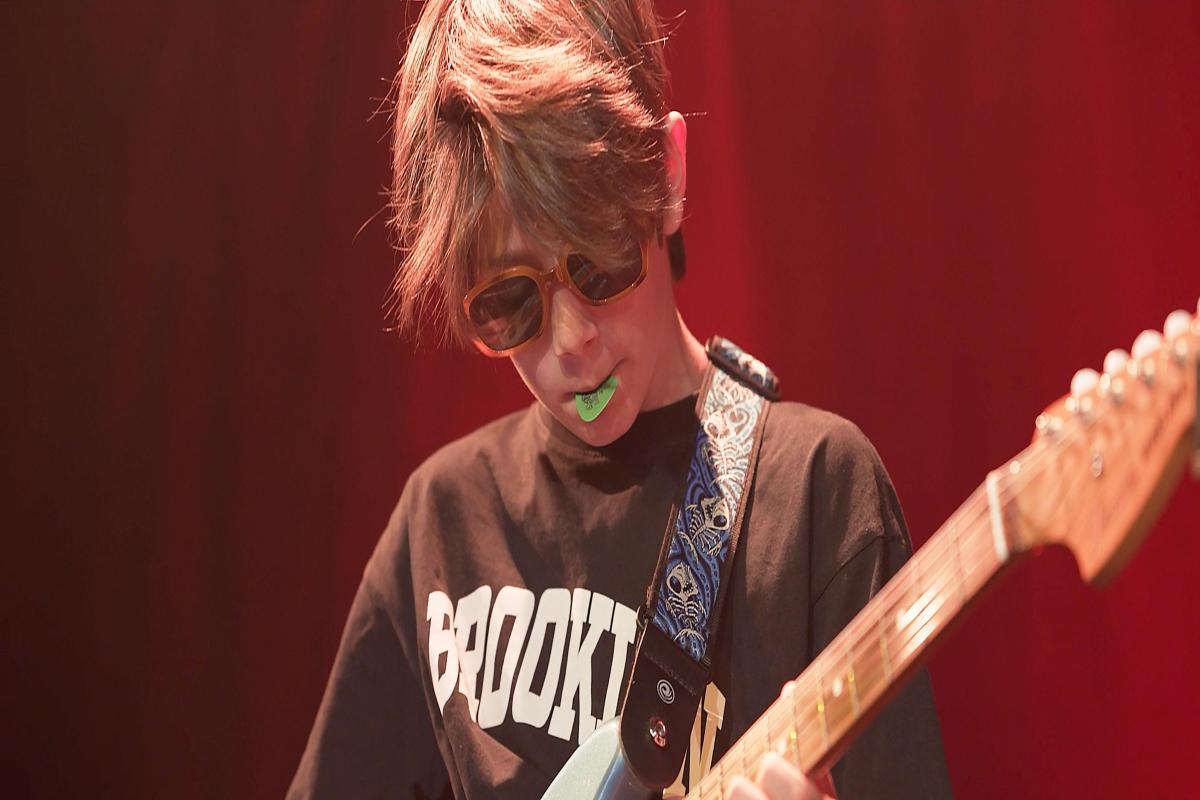
In contrast, tablature represents direct access to playing. It is an intuitive visual system that indicates where to place your fingers, without requiring abstract decoding. For enthusiasts of rock, blues or bass, it is often the "royal road" to obtain rapid and encouraging results. On an electric guitar, playing a legendary riff becomes possible in a few minutes, providing that feeling of immediate gratification so important for motivation.
This pragmatic approach allows one to learn "as you go", focusing first on the gesture and the sound. Tablatures are perfect for exploring various modern styles without a theoretical barrier. However, they rarely indicate the rhythm with precision, which forces the student to develop a great capacity for listening to reproduce what they hear. Many teachers today use this method to start, as it preserves spontaneity. It is a formidable tool for accompanying singing or playing in a group quickly, validating the fact that music is primarily a living practice before being a written science.
Which Guidance to Choose in Lausanne to Progress?
The Crucial Importance of a Reliable and Qualified Teacher
In the digital age, apps and tutorials abound, but nothing replaces the benevolent gaze of a human. A reliable teacher in Lausanne plays a role much wider than that of a simple instructor: they are a mentor who adjusts your posture, corrects the thumb position to avoid tension, and above all, who maintains your morale. An experienced and qualified teacher will know how to adapt their pedagogy to your rhythm, alternating between technical rigor and "pleasure" pieces.
The reviews of former students are often an excellent indicator to find this rare gem. The quality of the human relationship is decisive: a good teacher is one who demonstrates active listening to your needs. They will know when to insist on a difficulty and when to let go to preserve the joy of playing. This human experience transforms learning into a moment of sharing, far from the solitude of a screen. It is this connection that allows one to cross technical plateaus and keep the flame of motivation lit week after week.
Music School or Private Lessons at Home?
The learning setting also greatly influences your progression. Enrolling in a school offers a stimulating collective dynamic. You meet other enthusiasts there, you bathe in a creative atmosphere and benefit from a proven structure. Schools in Lausanne often offer quality infrastructure and opportunities to play in a group, which is essential for musical development. The benevolent confrontation with other students often pulls the level upwards.
On the other hand, the private lesson at home offers undeniable logistical comfort, fitting more easily into busy schedules. It is a "cocooning" solution where the teacher comes to you. While this option prioritizes convenience, it can sometimes lack the emulation found in a dedicated place. The choice will also depend on the budget, with rates in CHF varying according to the formula. Whatever the option, the essential thing is regularity and the quality of the method transmitted. Good teaching must make you autonomous, whether in your living room or in a classroom.
Children vs Adults: An Adapted Emotional Pedagogy
For Children: Awakening Through Play and Discovery
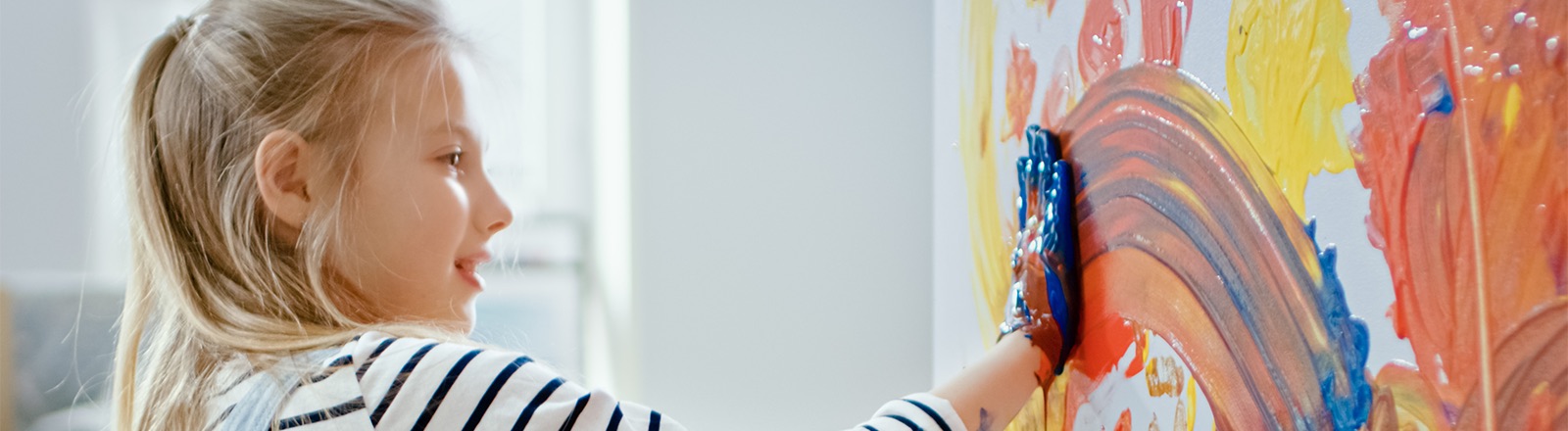
The pedagogical approach for children must be fundamentally playful. For a small child, the instrument is first a fascinating toy before being a work tool. In Lausanne, current methods prioritize sensory awakening. Music theory, if approached, is often integrated in the form of rhythmic games or colors, far from off-putting note dictations. The primary objective is to cultivate the love of sound and curiosity.
It is crucial to choose teaching that values every small victory. A high technical level is not the immediate priority; it is the construction of a positive relationship with music that counts. Specialized teachers know how to captivate the attention of the youngest with adapted repertoires, transforming each lesson into a micro-adventure. Pleasure must remain the main engine so that learning anchors itself durably in their lives. This is how vocations are born, in gentleness and constant encouragement.
For Adults: Targeted Objectives and Relaxation
Adults often approach the guitar with different goals: to decompress after work, share convivial moments, or simply prove to themselves that they are capable. For them, the approach must be pragmatic and rapidly gratifying. Many dream of accompanying themselves singing on an acoustic during evenings with friends. In this case, the teacher adapts the content to go to the essentials: magical chords, rhythm, and voice-instrument coordination.
It is not necessary to spend years on theory to enjoy oneself. The surest way to progress as an adult is to work on pieces that one really loves. Whether it be pop, variety, or folk, the repertoire must resonate with the student's tastes. The teacher then becomes a coach who helps bypass physical blockages (less flexible fingers) and optimize the often limited practice time. It is a moment for oneself, a parenthesis of well-being in the week.
Conclusion: Dare to Embark on the Adventure in Lausanne
Ultimately, whether it involves deciphering a classical sonata or strumming a blues on three chords, there is no wrong path. There are only different paths that all lead to the same destination: self-expression through music. In Lausanne, you are lucky to have access to a vibrant pedagogical community, ready to guide you, whether you prefer the rigor of sheet music or the freedom of tablature. The important thing is not to let the fear of theory paralyze you.
If you feel this call, do not hesitate any longer. Local structures offer benevolent settings to start, with reasonable investments, often around 111.- CHF monthly to start. Pick up your guitar, find the mentor who suits you, and let the first notes take flight. It is a gift you give yourself for life, an inexhaustible source of joy and sharing.
For those looking for human and structured guidance, Apolline Ecole d'Arts offers diversified music lessons in Lausanne, including guitar, singing, and workshops, perfectly adapted to the aspirations of each student.