The New Childhood Challenge in 2026: Seeing Beyond Words
As of January 1, 2026, we, as parents and educators, must face a new reality. The educational landscape has radically changed under the impulse of technology. In a world where artificial intelligence now generates millions of images per second, traditional education can no longer be limited to learning reading and calculation. Your child today navigates a visual ocean of unheard-of complexity, a ceaseless flow that requires a new form of literacy: visual literacy.
This is where art education makes total sense and becomes vital. It is no longer that simple leisure option added to the schedule just for show. It has become a fundamental pillar for cognitive development and critical thinking in young people. Understanding the image is understanding reality.
Art is not just a question of innate talent or a search for beauty; it is above all a universal language. Learning this language through structured and benevolent teaching allows children to decode what they see rather than passively consuming digital content. This culture of the image has become as essential as grammar or spelling. Without this key skill, a child today risks visual illiteracy, a major vulnerability in our ultra-connected society.
The modern school and extracurricular structures therefore have an immense responsibility: that of offering an education that fully integrates the artistic dimension to arm the next generation. It is about giving them the tools not to be fooled, to know how to look, analyze, and feel with accuracy.
Fortunately, educational policies are beginning to recognize this urgency. The goal is no longer to train only future professional artists, but enlightened citizens, capable of understanding the visual culture that surrounds and influences them. Each artwork studied, each drawing made with care, each piece of music played contributes to building solid intellectual armor. For the child, it makes all the difference between being a simple spectator of their life and becoming the conscious actor of their own culture.
Art Teaching as a Foundation for School Skills
It is time to deconstruct a tenacious myth: time spent on the arts is never time lost for the study of so-called "serious" subjects. Quite the contrary, the results of recent research in neuroscience confirm what pedagogues sensed: artistic practice considerably strengthens transversal academic skills. A child who learns to observe the subtle details of an artwork develops analytical and observational capacities that transfer directly to the school domain, whether to solve a problem in science or analyze a text in literature.
The teaching of artistic disciplines imposes a specific and beneficial rigor. The progressive mastery of an instrument or the creation of a complex painting demands patience, method, and above all a capacity for honest self-evaluation. These qualities are the true foundation of sustainable school success. Within the framework of their studies, students with a regular cultural practice often display better results, not by magic, but because they have learned to manage effort over the long term and overcome frustration.
Education through art structures thought in a unique way. It teaches how to break down a large problem (a blank canvas, a complex score) into small manageable steps. Furthermore, the impact on emotional skills is just as major. The modern school places increasing emphasis on "soft skills", and this is precisely what artistic teaching cultivates with fervor. Faced with the material, the child must make choices, take measured risks, and above all, accept error as a stage of learning.
This resilience is a key skill for their school path and their future adult life. Educational programs that integrate a strong cultural dimension see their students develop self-confidence that radiates positively on all their academic results.
A Case Study on Concentration and Attention
The in-depth study of a manual practice like drawing shows spectacular effects on concentration. In a school context where student attention is constantly fragmented by notifications and screens, artistic time offers a bubble of "depth" and mental calm. The child learns to focus their attention to successfully complete a complex task that cannot be "scrolled". This capacity for deep concentration, acquired through the regular teaching of the arts, becomes a decisive asset for all of their learning, allowing them to dive into their homework with greater efficiency.
A Cultural Policy for Youth: Understanding the World
Access to art is, fundamentally, an eminently political question. It touches on equal opportunities, emancipation, and the formation of the citizen of tomorrow. A true cultural policy for youth must guarantee that every child, whatever their background, can access this teaching of excellence. In our country, initiatives are fortunately multiplying to put culture back at the center of the educational debate, because the stakes go far beyond the simple framework of Wednesday afternoon leisure.
Understanding an artwork is also learning to understand history, society, and the policies that have shaped our current world. Art education gives young people the indispensable keys to decode hidden messages, whether advertising, ideological, or propaganda. It is a form of intellectual self-defense necessary in 2026. The implementation of ambitious programs in schools and private structures responds to this vital need for critical sense.
It involves helping our children develop their own "policy of the image": knowing what they accept to see, what they believe, and what they reject. The policy of the city and urban planning also play a role in this accessibility. The place granted to art schools in the urban space testifies to the importance society accords to this dimension. A visionary educational policy integrates the arts not as the cherry on the cake, but as an essential ingredient of the democratic dough.
It is through culture that the child becomes part of a collective history and learns to respect divergent visions, an essential political skill for living together and tolerance.
The Practical Framework: From Music to Visual Arts
Concretely, how does this education materialize daily? The artistic framework naturally varies according to the chosen disciplines, but the pedagogical objective remains the same: the harmonious development of the child. Visual arts and music are the two major pillars of this teaching, each bringing specific and complementary benefits for young minds.
Visual Arts and Thought Construction
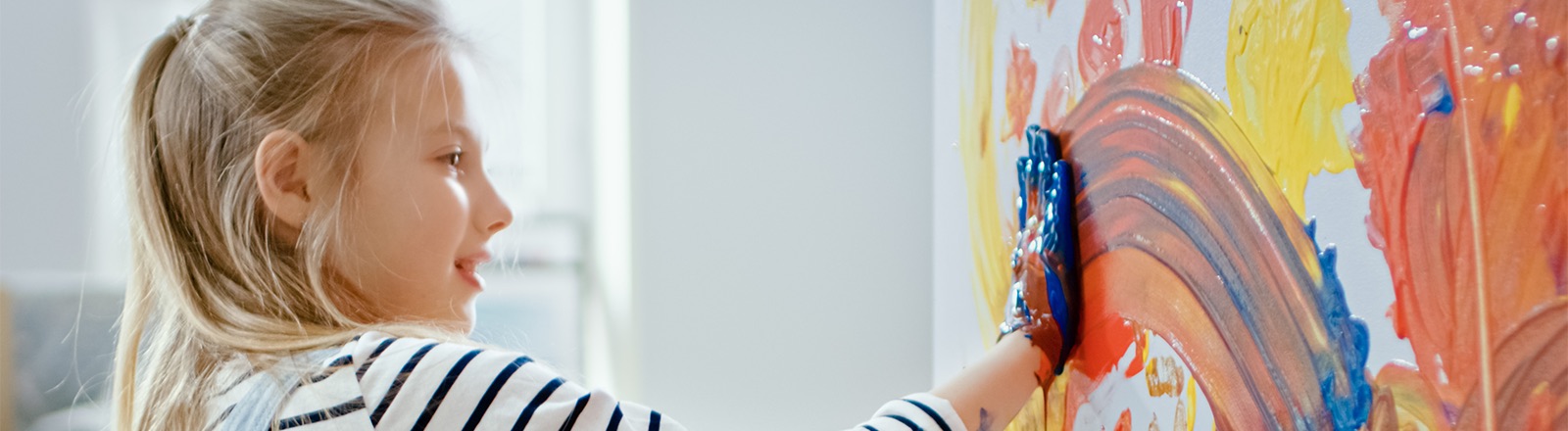
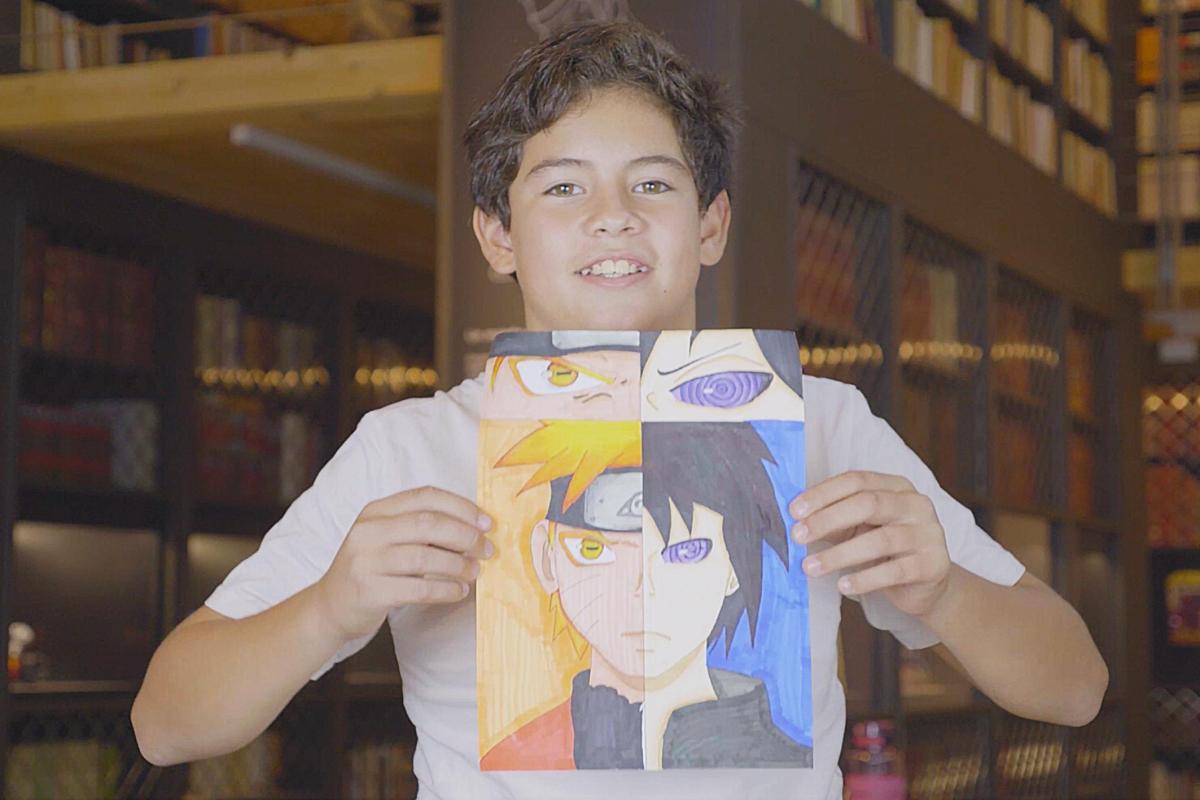
Visual arts (drawing, painting, sculpture, modeling) offer a unique and tangible terrain for experimentation. For a child, manipulating matter, mixing colors, and organizing space on a sheet is an intense intellectual exercise. The creation of a visual artwork requires planning (having an idea), visualizing (imagining the result), and realizing (coordinating hand and eye). In our drawing classes or illustration workshops, the emphasis is placed on this progressive mental construction.
The teaching of fundamental techniques (perspective, anatomy, color theory) is not an end in itself, but a powerful means for the student to structure their vision of the world. This allows them to transform an abstract idea into concrete reality, thus reinforcing their feeling of competence.
Music and Active Listening
Music, for its part, develops a form of temporal, rhythmic, and mathematical intelligence. Learning music theory and an instrument in a school or private framework requires rigorous but rewarding discipline. Listening is central to this process. To play in tune and in rhythm, the child must develop fine listening of themselves, their instrument, and other musicians. This skill of active listening is transferable to all social, family, and professional situations.
Musical activities, whether piano, guitar, or singing, structure the brains of young people in a unique way, strengthening working memory and motor coordination. The implementation of these practices obviously requires adapted premises and high-quality equipment. Whether it is a bright visual arts studio or a perfectly soundproofed music room, the physical environment plays a crucial role in the learning experience. It is in this safe and inspiring framework that the child can feel free to explore their creativity without fear of judgment.
Experience and Quality: How to Choose the Right Training?
Faced with the plethora and sometimes confusing offer of extracurricular activities, parents often feel lost. How to distinguish a simple creative daycare from a true school of artistic teaching that will help your child grow? The key undeniably lies in the quality of the training and the real experience of the instructors. For there to be real progression and a lasting impact on the skills of the child, the supervision must be professional and passionate.
Good artistic training is characterized by a clear, structured, and evolving pedagogical program. It is not just about "doing art" to stay busy, but truly learning. The teaching artists must be capable of transmitting their know-how with pedagogy, adapting with finesse to the age, personality, and level of each child.
The search for excellence must never exclude pleasure, but it must guide the practice towards self-transcendence. Parents must be attentive to feedback on results (not grades, but progress) and the concrete evolution of the artworks produced by their children over the months.
Experience shows us that regularity is essential. A punctual camp during the holidays can trigger a passion, it is a spark, but it is the weekly course that builds skills in depth. The implementation of a small routine of practice at home, encouraged with benevolence by parents, multiplies the beneficial effects of the teaching received at school.
It is an investment in time and energy for the whole family, certainly, but the benefits for the global development of childhood are inestimable and will last a lifetime.
The Importance of Benevolent Evaluation
In a framework of quality teaching, evaluation is never a sanction but always a tool for progression and valorization. Unlike the classic school system where the numerical grade can be a source of anxiety and competition, artistic evaluation is often done through the exhibition of artworks or the end-of-year concert. This allows the child to value their work, share their pride, and concretely measure the path traveled.
This positive and constructive approach reinforces their desire to learn and their intrinsic motivation for the study of increasingly complex techniques.
The Cultural and Societal Impact of Young Artists
Encouraging artistic practices among young people has positive repercussions well beyond the immediate family sphere. It is a real investment for the future cultural dynamism of our country. These children educated in art and beauty will be the creators, innovators, decision-makers, and informed audience of tomorrow. They will carry a rich, nuanced, and empathetic gaze on the world, capable of appreciating the diversity of cultural expressions without prejudice.
Local policies that actively support art schools and cultural initiatives for childhood participate directly in the vitality of the social fabric. Art creates connection where screens isolate. When children play music together in an orchestra or collaborate on a mural, they learn citizenship and cooperation concretely.
The pooling of individual talents in the service of a collective artwork is a lesson in applied politics much more effective and striking than any theoretical speech.
Conclusion: An Investment for the Future
Ultimately, art education in 2026 is not a luxury reserved for an elite; it is an absolute necessity to navigate serenely in our complex era. It offers children the critical, emotional, and cognitive skills indispensable to succeed in their school, professional, and personal lives. It gives them the peaceful weapons to understand the politics of the image and not suffer the incessant digital flow.
Investing in this teaching is investing in their freedom to think and their capacity to dream. It is an inestimable gift that we give them for their future. A lasting impact on the development of the child that will resonate throughout their adult life.
Whether through the stroke of a drawing or the melody of a song, every child deserves to find their unique mode of expression. For those seeking professional and warm accompaniment in this process, Apolline Ecole d'Arts offers weekly art classes for kids in Visual Arts throughout Romandy and in Music in Lausanne, as well as immersive holiday camps to deepen this essential practice.