
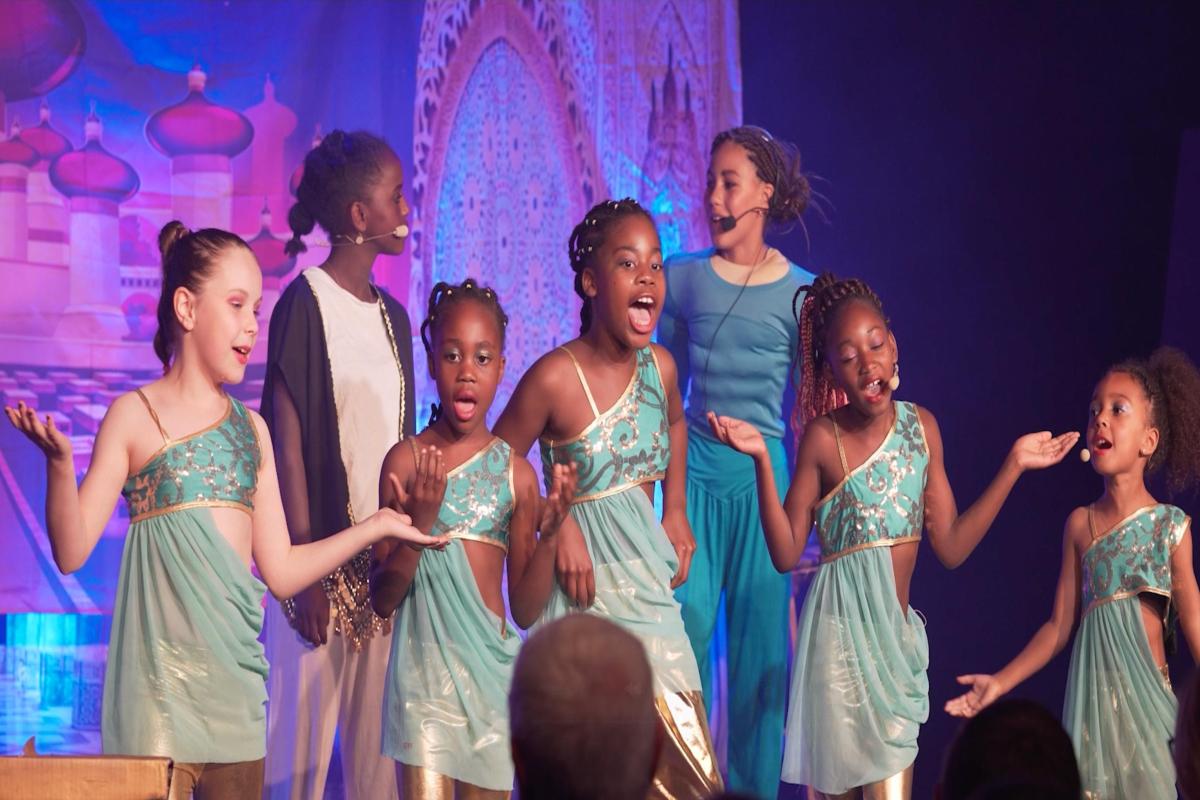
Shattering the Perfect Voice Myth in 2026
Do you feel that slight apprehension at the idea of singing in front of other people? It is a completely natural reaction. The world of the stage exercises a magnetic fascination, but it often intimidates those who have never dared to take the plunge. When seriously considering signing up for a theatre or musical theatre class, one question comes back tirelessly, like a catchy refrain: "Do I need an exceptional voice to participate?"
At the start of 2026, the answer is profoundly reassuring: the codes of the performing arts world have evolved. The era where only cold, academic technical perfection counted is well and truly over. Today, whether for a shy child, young people in search of identity, or adults looking for an escape, it is authenticity and the ability to transmit an emotion that take precedence over pure vocal prowess.
In a modern and benevolent art school, the pedagogical objective is never to transform every student into an opera soloist from the first session. Quality training in musical theatre aims above all to develop your global expressiveness. Singing then becomes a wonderful tool, just like dance or acting, to tell a vibrant story on stage. For anyone wishing to join a group and live this human adventure, it is crucial to understand that innate "talent" counts much less than the sincere desire to learn. Registration for a workshop often marks the first decisive step to deconstruct one's fears and discover unsuspected artistic potential.
Over the course of a year of regular practice, the progress observed is often spectacular. What seems impossible to you during the very first class will become second nature after a few months of guided training. In Switzerland, and particularly in dynamic cultural hubs like Lausanne or Geneva, the current pedagogical approach emphasizes the pleasure of discovery and collective progression, far from stressful individual competition.
Singing vs Acting: What is the Difference on Stage?
It is fundamental to grasp the distinction between giving a vocal concert and interpreting an embodied role in a musical. When the public attends a show inspired by Broadway or the West End, they do not come solely to listen to beautiful notes aligned perfectly; they come to see characters living intense emotions, joys, and sorrows. It is precisely here that theatre takes over from pure singing.
On stage, a voice that is technically irreproachable but devoid of soul will leave the spectator indifferent. Conversely, a voice that is perhaps imperfect, but inhabited by the overwhelming truth of the character, will touch hearts directly. That is all the beauty of this living art.
Liberation through "Character Voice"
In the jargon of musicals, we often speak of "Character Voice". This simply means singing with the soul of the one you are embodying, and not necessarily with the voice of a classical soloist. For a child or a beginner, this is liberating news. This implies that your vocal "imperfections" can become real artistic assets if they serve the narrative. During a creative workshop or a weekly class, the work focuses on intention: why does the character start singing at this precise moment? Often, it is because the emotion is too strong to simply be spoken. Words are no longer enough, so the melody takes over.
The Strength and Benevolence of the Group
Musical theatre is intrinsically a troupe art, a collective adventure. Unlike an individual singing lesson which can sometimes isolate, the group dynamic literally carries the participants. Children and adults alike learn to listen to each other, to harmonize their voices, and to create a powerful and enveloping ensemble sound.
This collective energy reassures the shyer profiles enormously: within a vibrant choir, each individual voice is supported by the others. This allows everyone to gain confidence in their capabilities without suffering the immediate pressure of being a soloist. This is the operating magic of ensemble training: the whole becomes much greater, more beautiful, and stronger than the sum of the parts.
Learning: How We "Build" a Voice
It is important to recall that no one is born with a perfect and finished technique. A voice is built, sculpted, and worked on with patience. This is the whole object of structured training within a specialized school. Learning happens in progressive stages, always respecting the physiology and rhythm of each student, whether they are 6-year-old children discovering their breath or young adolescents in the middle of their voice change.
A good singing class, when integrated into a complete musical theatre curriculum, always starts with the fundamental base: breathing.
Technical Coaching and Breath Mastery
Vocal coaching in the context of musical theatre differs significantly from static choir singing. Students must learn to manage their breath while moving, dancing, or even running on stage. Practical and fun exercises carried out during the school year aim to strengthen the diaphragm and solidly anchor the voice in the body.
It is a physical job as much as an artistic one. One often discovers with surprise that singing in tune is more a question of muscular support and posture than a celestial "gift". With an adequate level of pedagogical supervision, even students who thought they "sang out of tune" correct their pitch in a few months, simply by learning to listen to themselves better and breathe effectively.
The Contribution of Complementary Disciplines
The art of musical theatre is, by essence, multidisciplinary. Rhythmic skills like tap dance or jazz dance, often taught in parallel or integrated into workshops, indirectly but powerfully help singing. How does this work? By developing your innate sense of rhythm.
A well-placed voice is above all a voice that is rhythmically precise. Experience shows that when the body integrates the rhythm (thanks to tap dance or movement), the voice places itself more naturally, without excessive effort. It is a holistic and complete approach to art that is found in the best schools of French-speaking Switzerland.
Children, Youth, and Adults: An Approach for Every Age
The benevolent pedagogy of musical theatre adapts flexibly to the different developmental stages of life. What motivates a 7-year-old child naturally differs from the expectations of 15-year-old youth or adults seeking a fulfilling leisure activity.
For Children (6-10 years): Playful Awakening
For the child, the class must remain above all a magical playground. The main objective is sensory discovery and pure pleasure. At this tender age, we do not speak of rigid or austere vocal technique, but of sound games, imitation, and joyful discovery of the scenic space. Registration for such a workshop allows the youngest to channel their overflowing energy and develop their elocution in a playful way. Songs from their favorite animated films often serve as an entry point, making learning immediate and motivating. The end-of-year show is then experienced as a great collective party, and not as a stressful exam.
For Youth and Adolescents (11-18 years): Self-Affirmation
Young people often go through a complex period of identity transformation. Musical theatre offers them a secure and non-judgmental framework to explore different facets of their personality. In-depth work on the voice and the body helps to tame a changing self-image. It is often at this pivotal age that professional vocations are born, but even for passionate amateurs, the concrete experience of the stage brings invaluable self-confidence for future life (ease in oral presentations, interviews, presence). The group then becomes a second family, a place of strong and reassuring belonging.
For Adults: Letting Go
Adults who join a musical theatre class often seek to disconnect from a busy daily life. For them, the challenge is often to unlearn habitual social restraint to finally dare to "make noise", exist fully, and take up space. Coaching for adults insists particularly on letting go and rediscovering play, in the noble sense of the term. Whether one is an absolute beginner or already has a little past experience, the pleasure of creating a collective show remains the main engine. It is never too late to get on stage and vibrate.
Practical Info: Where and How to Register in French-speaking Switzerland?
If you reside in French-speaking Switzerland, you are lucky to benefit from a rich and varied training offer. Whether you are looking for a regular weekly class or an intensive discovery camp, it is important to choose a school that resonates with your aspirations. Cultural cities like Lausanne, Geneva, Yverdon, or Etoy offer structures adapted and equipped to practice this demanding but so rewarding art.
Course Formats and Prices (CHF)
Generally, registration is done for the full school year, guaranteeing constant group progression until the final show. However, prices and formats can vary according to your needs. Here is what you need to know about the current market in 2026:
- Weekly Classes: This is the ideal classic formula to progress sustainably and forge bonds. The duration generally varies between 60 and 90 minutes per session. Average prices often start around 79.- CHF per month for one hour, and can adjust around 99.- CHF or more for longer sessions of 90 minutes, depending on the level and technical infrastructure of the school.
- Holiday Camps: For those who still hesitate to commit to a whole year, camps organized during school holidays are an excellent alternative to "taste" the discipline. Over an intense week, participants often mount a mini-show. These camps take place throughout French-speaking Switzerland (from Geneva to Fribourg, passing through Lausanne, Montreux, Vevey, Sion, or Neuchâtel). The price for a full week of camp generally revolves around 290.- CHF.
How to Choose Your School?
For quality training, always favor schools that offer a multidisciplinary and open approach. A good establishment will propose not only musical theatre, but also specific music, theatre, or singing classes for those who wish to deepen a particular discipline. Also verify if the school regularly organizes shows or presentations, because the ultimate goal of this art is the magical encounter with the public.
In Lausanne for example, certain structures allow judiciously combining modern music workshops with theatre, thus offering a complete palette of modern musical skills.
Material and Preparation
Unlike ballet which can require expensive equipment, musical theatre is an accessible art that demands little material investment at the start. A flexible and comfortable outfit to move freely, clean indoor shoes, or simple jazz shoes are ample to begin. The essential investment lies in your energy, personal work time, and your assiduity to classes. Registrations generally open before the start of the school year, but many welcoming schools accept motivated students during the year or offer trial sessions to reassure the undecided.
Conclusion: Your Place is on Stage
In summary, never let the fear of "not knowing how to sing" deprive you of the immense pleasure of musical theatre. It is not a technical vocal contest, but a true school of life, sincere expression, and solidarity. Whether you are a child dreaming of magic and stories, a young person passionate about the energy of Broadway or an adult seeking a new path of personal expression, there is necessarily a class, a workshop, or a benevolent group made for you.
The performing arts world is vast, warm, and welcoming. You just have to dare to cross the door of a rehearsal room to discover it. With the right coaching and an encouraging environment, you will discover with wonder that your voice has much more potential and colors than you believe. The experience of the stage is often transformative, and this adventure starts with a simple registration. So, are you ready to raise your voice and join the troupe?
For those looking for an established and passionate structure, Apolline Ecole d'Arts offers benevolent musical theatre classes from age 6 in Lausanne, Yverdon, and Etoy, as well as specific singing lessons in Lausanne, with accessible rates starting at 79.- CHF per month.