
Introduction: From Dream to Printed Reality
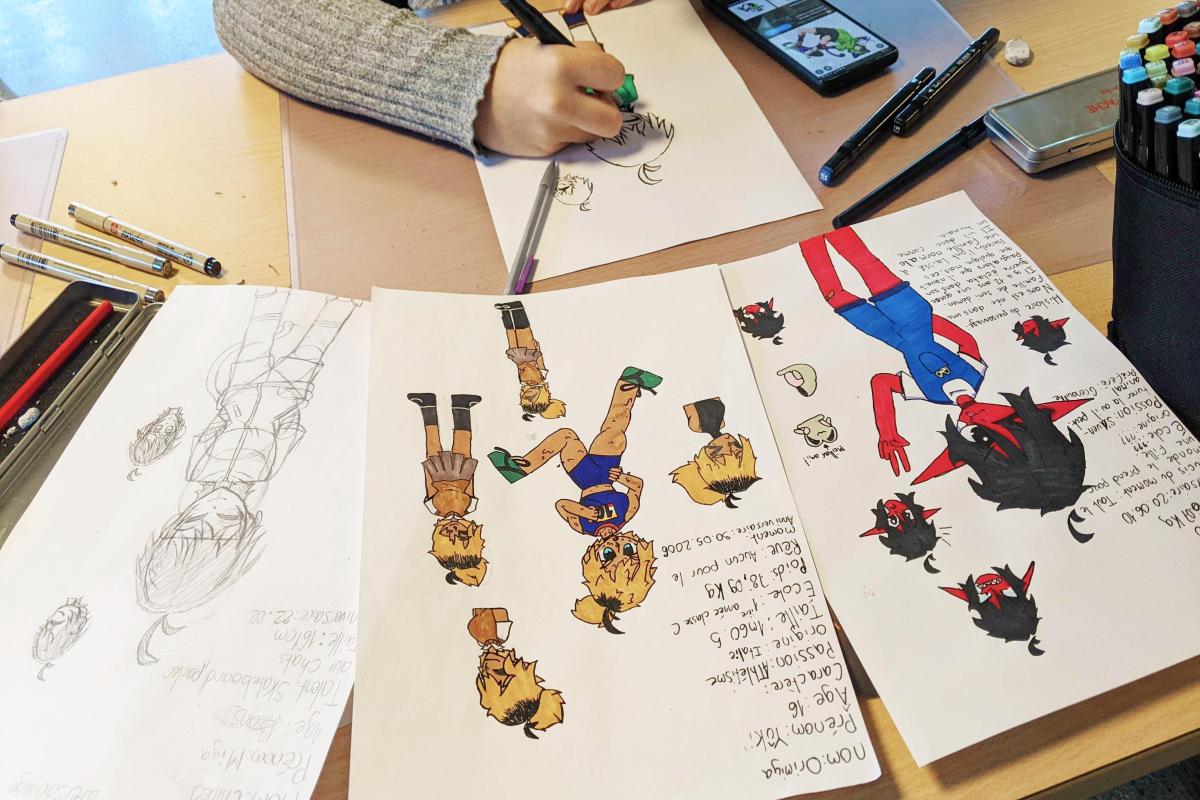
Imagine the immense pride lighting up your children's faces when they finally hold their own creation in their hands: a real fanzine. At the start of this year 2026, while the all-digital world dominates our lives, returning to paper offers a tangible and reassuring sensation. For a young enthusiast, transforming scattered sketches into a structured manga is much more than a simple pastime; it is a work of self-expression that forges confidence. This ambitious project is an open door to art, allowing boundless energy to be channeled into a concrete achievement.
Whether you are a parent eager to support your child's creativity or a beginner dreaming of sharing their stories, this guide is designed to accompany you with kindness. Creating a fanzine requires patience, the right materials, and a clear vision, but it is an extraordinary adventure to experience as a family. Beyond simple drawings, it is a school of life that teaches perseverance. Ready to take up the challenge? Let's dive together into the fascinating universe of narrative illustration and discover how to give life to a unique artistic world.
Step 1: Planning Your Year and Your Story
Embarking on the creation of a manga is a long-haul journey that requires gentle but rigorous organization, especially so as not to disrupt the school rhythm. To avoid this magnificent project becoming a source of stress before exams, it is crucial to establish an adapted schedule. The idea is to transform this work into a refuge, a moment of pleasure at home after school. Explain to your children that consistency is the best way to progress without burning out.
Take advantage of holiday periods to advance on the most time-consuming steps, like inking or layout. These moments of pause in formal education are precious bubbles for the imagination. It is during these free times that illustration can flourish without the pressure of the clock. Encourage your child to see their project as a series of small victories: writing the script in autumn, sketching in winter, and finalizing in spring. Integrating these creative activities into daily life allows maintaining the flame of passion throughout the year, transforming a simple desire into a completed work.
Step 2: Learning Fundamental Techniques
Enthusiasm is the engine, but technique is the fuel. For a manga to be readable and captivating, it is essential to learn the codes of visual storytelling. It is not just knowing how to draw, it is knowing how to tell a story. Taking specialized courses can prove decisive in this learning process. In a benevolent artistic environment, we discover that every line has a meaning and an intention. One must not skip steps: mastering the basics then allows breaking the rules with style.
An experienced teacher will know how to guide the student through the different levels of difficulty, from character design to background perspective. The instruction received during a workshop allows correcting awkward postures and refining the stroke. For a beginner, understanding how to structure a page is a revelation. It is here that one acquires real graphic skills that will serve a lifetime. Whether for a personal or school project, the rigor of the techniques learned brings deep satisfaction: that of seeing one's drawing finally resemble what one had in mind.
Step 3: Materials: From Pencil to Charcoal
Touching, testing, choosing one's materials is an integral part of the pleasure of art. If the interior pages of a manga often demand the sobriety of black ink, the cover is the place for all audacities. It is the ideal opportunity to introduce young artists to more traditional mediums. Why not create a vibrant cover illustration with watercolor? The transparency of watercolor brings a poetry and light that immediately draw the eye to the fanzine.
For those who prefer denser and modern colors, acrylic is fantastic for creating striking titles and solid flats. Some bold creators do not hesitate to use charcoal to give a raw and dramatic look to their preparatory sketches or to dark "seinen" style covers. We even see, in the conventions of 2026, covers painted with oil, bringing an incredible texture and nobility to the project. Whatever the choice, having one's own tools is a sign of commitment to one's work. It is an investment in one's artistic identity.
Step 4: Where to Train to Succeed in Your Project?
Isolation is sometimes the enemy of the creator. Joining a workshop allows sharing doubts and successes with other enthusiasts. Today there are many schools and structures, especially around Geneva, that offer a stimulating framework. Registering for an intensive camp during holidays is often the trigger needed to finalize a project. These camps are moments of total immersion where one lives to the rhythm of drawing, surrounded by comrades who share the same flame.
For those who cannot travel, online training courses now offer remarkable pedagogical quality, allowing to learn from one's living room. However, nothing replaces the live correction of a teacher in a real studio. Collective workshops encourage the exchange of advice and mutual aid. Whether you choose weekly classes or one-off sessions, the important thing is to find a place of instruction that respects your sensitivity. These artistic living spaces are essential to nourish motivation and transform a solitary practice into a human adventure.
A Project for All Ages: From Child to Adult
Do not believe that the fanzine is reserved for teenagers! It is a wonderful format that adapts to all ages of life. For a child, it is a narrative construction game. But we also see magnificent projects emerging led by an adult or even a couple. Imagine the complicity of a couple creating together: one imagines the story, the other draws it. It is a fusion of talents that strengthens bonds.
We can even imagine designing a small picture book for a baby in the family. Telling a simple story for a baby requires absolute visual clarity, an excellent synthesis exercise for any draftsman. Artists of all ages find total freedom in self-publishing. For parents, accompanying this process is a form of emotional education: one teaches their child to see things through. These shared activities create imperishable memories and value everyone's skills.
Conclusion: Print and Share
After months of passionate work, the moment of printing is a magical outcome. Holding one's work, feeling the weight of the paper, is the ultimate reward for the child as well as for the expert. In Geneva and in French-speaking Switzerland, the community of fanzine creators is lively and welcoming for every beginner. It is the moment to celebrate this success, fruit of a year of efforts and dreams.
Remember that every great manga author started with a first hesitant sketch. If this adventure has made you want to go further and perfect your techniques during the next holidays, know that our Art School offers benevolent accompaniment through its courses and artistic camps. Continue to create, to learn, and to share your vision of the world, because your story deserves to be read.