The Urgency of Attention: Why Our Children Need to Slow Down
In this month of February 2026, being a parent often feels like a silent struggle against an invisible but omnipresent adversary: the attention economy. We watch our children navigate a digital world where everything is designed to capture their gaze, fragment their concentration, and stimulate their dopamine every millisecond. This constant hyper-connection, while fascinating, comes with a hidden cost. It slowly erodes the child's capacity to be bored, to dream, and, above all, to focus deeply on a single task. Faced with this challenge, art no longer presents itself simply as a cultural option, but as a genuine cognitive and emotional necessity.
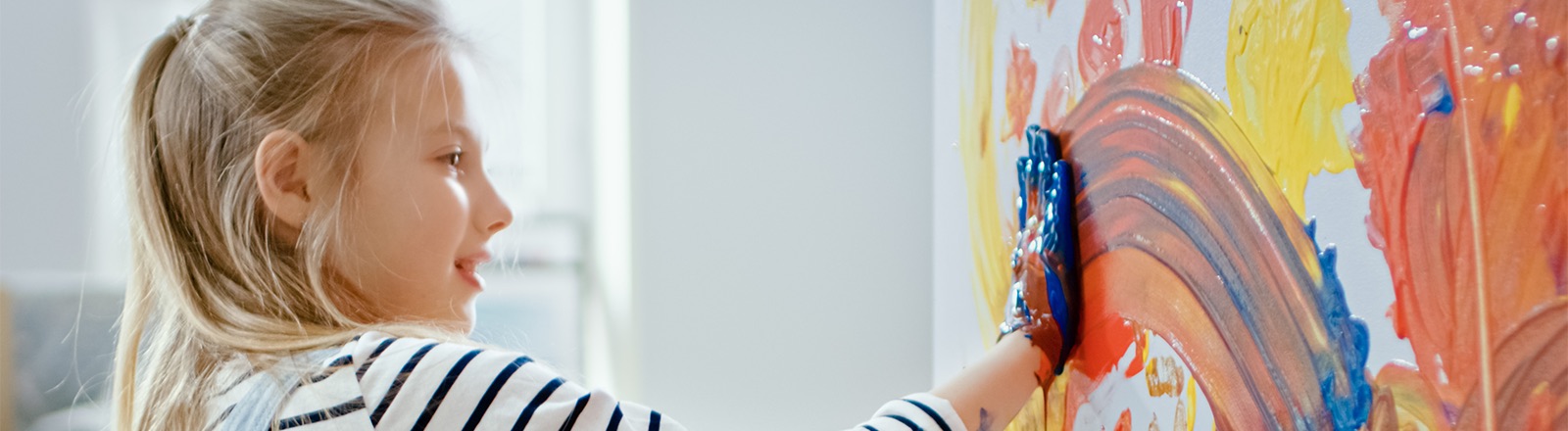
It is not about demonizing screens, which are an integral part of their life, but about proposing a powerful alternative, a vital counterweight. Offering activities that slow down time becomes an act of care, almost a form of preventive therapy for overheated minds. This is where drawing and painting reveal their true power. Far from being simple hobbies, these disciplines demand total presence. When your child sits before a blank sheet in a workshop, they enter a different space-time, protected from the outside tumult, where only their creativity dictates the rhythm.
Families in Switzerland, and particularly in dynamic cities like Lausanne or Geneva, feel this urgency. The pressure of performance at school, coupled with urban agitation, creates an immense need for "bubbles" of disconnection. Registering one's son or daughter for a weekly art class is offering them a sanctuary. It is validating the idea that calm and slow construction are just as important as speed and reactivity. It is, fundamentally, a choice of benevolent education that prioritizes mental health and inner balance.
The Science of "Flow": When the Brain Learns to Breathe
Have you ever observed a child totally absorbed in their drawing, tongue slightly sticking out, deaf to the world around them? This state of grace has a name: "Flow". It is a state of optimal concentration where action and awareness merge. To reach this state, the brain must renounce "zapping" to dive into depth. Visual arts are privileged vectors for accessing this mental zone. Unlike the passive consumption of videos, creation demands complex coordination between the eye, the hand, and the mind, forcing the neural circuits of attention to strengthen.
In a painting class, a mistake is not erased with a click. It must be understood, accepted, or transformed. This process teaches a form of silent resilience. The child learns that satisfaction does not come from immediacy, but from sustained effort and patience. It is invisible work of structuring thought. Neuroscience confirms that the regular practice of an artistic activity thickens the prefrontal cortex, the area of the brain responsible for planning and impulse control. It is a transversal skill that will serve just as much in their school studies as in their future career.
This inner calm acquired brush in hand then diffuses into the rest of the day. Parents often report that on class evenings, the atmosphere at home is more peaceful. The child, having discharged their emotional tensions onto paper, is more available, more serene. Through varied techniques, whether watercolor or charcoal, they learn to modulate their energy. This emotional regulation is at the heart of the pedagogy we defend, where the human element takes precedence over technical performance.
The Power of Routine: The Benefits of Weekly Classes
Transformation does not happen in a day. As with sports, it is regularity that sculpts the mind. Weekly classes offer a reassuring and predictable framework, an anchor in an often chaotic week. Knowing that every Wednesday or Saturday, they will find their workshop, their classmates, and their project in progress, provides the child with a feeling of security essential to their blossoming. In Lausanne, where the offer of leisure activities is vast, choosing a lasting structure allows building this virtuous habit throughout the year.
Over the sessions, learning settles in. The child observes their own progress, not via a grade or a numerical score, but through the tangible evolution of their works. This delayed gratification is the perfect antidote to the culture of immediacy. They realize that mastery requires time and that persistence bears fruit. This is where the approach of a school like Apolline makes total sense, by valuing the journey as much as the final result. The confidence they gain by mastering a difficult technique reverberates on their global self-assurance, allowing them to approach the challenges of life with more serenity.
Moreover, these regular appointments create belonging. The child joins a community of peers who share their sensitivity. Far from the labels sometimes stuck at school, here they can reinvent themselves. In our workshops in the canton of Vaud or elsewhere, we see friendships born based on a common passion for creation, bonds often more authentic because they are devoid of school judgment.
Total Immersion: The Magic of Holiday Camps
If regularity is the key, immersion is the accelerator. School holidays represent the ideal moment to totally break with digital habits. Our intensive camps act like a true creative "detox". During a whole week, children and young people dive into their artistic universe from morning to evening. This continuity allows crossing technical thresholds impossible to reach in one hour of class. Immersion favors total letting go, conducive to great inner discoveries.
The experience of a residential camp adds an extra dimension: autonomy. Going to a camp in Switzerland, far from the family home, is growing up all at once. It is learning to live in a group, to share materials, to respect the sleep and concentration of others. It is a school of life in miniature, benevolent and stimulating. For many youths, these camps are the highlights of their year, enchanted parentheses where they feel fully themselves, surrounded by a "tribe" that understands them. Whether for our holiday camps focused on music or drawing, the objective remains the same: to create foundational memories.
For parents, these camps also offer invaluable peace of mind. Knowing your child is blossoming, active, and creative during the holidays, rather than passive in front of a console, lightens the mental load. It is a direct investment in their well-being. The feedback we have after these intensive weeks speaks for itself: the children often return physically tired, but emotionally recharged, with a spark of pride in their eyes that is priceless.
Beyond Drawing: Music and Manga as Levers of Concentration
The gateway to concentration is not unique. If classical drawing does not seduce all profiles, other disciplines offer similar benefits. Manga and illustration, for example, are experiencing massive popularity among adolescents. Far from being a subculture, manga is a demanding art that requires extreme narrative and graphic rigor. Learning to structure a page is learning logic and storytelling. Our manga classes use this passion as a pedagogical lever: the teen engages in complex work because the subject fascinates them viscerally.
Similarly, music is a mistress of absolute rigor. Playing an instrument solicits memory, fine motor skills, and simultaneous listening. It is a complete cerebral gymnastics. A drum or piano class forces the child to be totally present to what they are doing; a second of inattention, and the rhythm is lost. This discipline of the present moment is a form of active meditation. In Lausanne, our music classes aim precisely to develop this inner listening, transforming impulsivity into musicality.
For adults too, these practices are salvific. Getting back to artistic training at 30, 40, or 50 years old is authorizing oneself to become a beginner again, to play, to breathe. Whether through painting or singing, it is a powerful way to reconnect with oneself after work stress. It also sets an example for the younger ones: creativity is an adventure that lasts a lifetime, an inexhaustible source of joy and personal renewal.
The Role of Art in Child Development
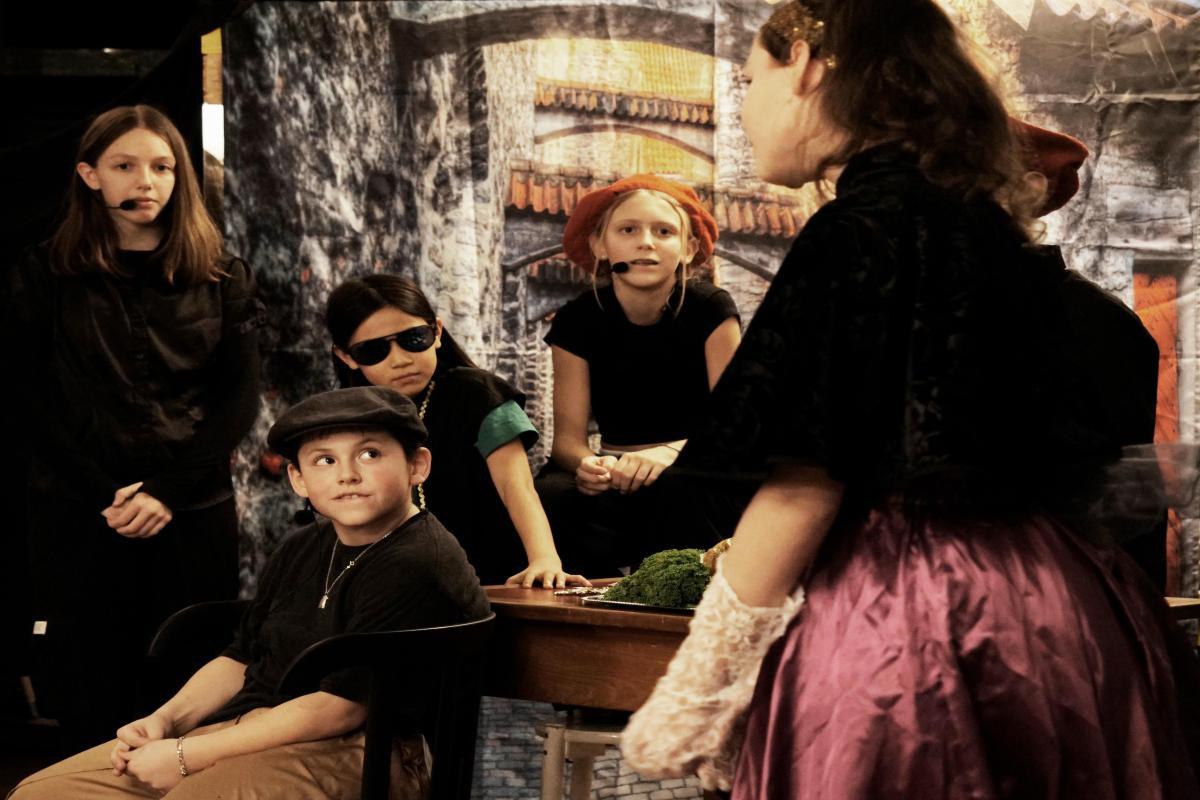
Art is not an isolated subject; it is a universal language that nourishes all facets of a child's development. By learning to look at the world to draw it, they develop their sense of observation and critical spirit. By mixing colors, they experiment with physics and chemistry. By acting in a play, they explore human psychology and empathy. It is a global education that prepares for tomorrow's challenges. In 2026, while artificial intelligence executes logical tasks, human qualities of sensitivity, intuition, and creativity become the real assets.
The workshops are laboratories where one has the right to make mistakes. This psychological safety is fundamental. In a world that judges and classifies constantly, the art workshop remains a space of freedom. At Apolline, we scrupulously ensure that every student, whatever their level, feels valued in their singularity. It is this accumulated confidence that will allow the child to dare to speak in public, to propose innovative ideas, or simply to be comfortable in their own skin.
The bond with the family also emerges strengthened. Sharing creations, explaining their approach, inviting parents to a vernissage or an audition, are precious moments of sharing. Art creates bridges, opens dialogue, and allows saying with colors or notes what one sometimes cannot say with words. It is a powerful emotional cement for the family core.
Choosing the Right Environment to Flourish
For this alchemy to operate, the choice of place is capital. Not all courses are equal. One must look for a balance between technical requirement and human benevolence. A good school must be a place of life, vibrant and warm, and not a simple cold classroom. The quality of the teaching staff is paramount: they must be passionate artists but above all trained pedagogues, capable of adapting to the psychology of each age.
Geographical proximity plays a role, certainly – finding a workshop near one's home or school facilitates logistics for parents – but the quality of the experience takes precedence. Many families do not hesitate to cross the canton of Vaud or come from Geneva to find this specific atmosphere that allows their child to reveal themselves. The offer of visual arts classes is vast, but finding "their" artistic home is a quest that deserves attention.
Finally, let's not forget the practical aspect. A professional structure offers guarantees: pedagogical continuity, quality materials, security, and insurance in case of a glitch. It is a framework that allows creativity to express itself without logistical constraints. Whether for a term or for several years, engagement in an artistic practice is one of the most beautiful gifts one can give a child to help them grow in consciousness and joy.
To accompany this journey towards concentration and fulfillment, Apolline offers complete and benevolent support throughout French-speaking Switzerland, placing the human at the heart of artistic learning.