
An Artistic Pedagogy for Personal Fulfillment
Musical theatre is much more than a simple leisure activity; it is a true school of life where self-expression takes on full meaning. In Switzerland, and particularly in the cultural dynamism of Lausanne, this comprehensive art form is attracting more and more families. Signing up for a musical theatre class allows every child, as well as adults, to discover a fascinating universe where singing, acting, and dance become one. Beyond technique, it is powerful emotional training that transforms learning into an unforgettable human adventure, guiding students towards the stage with kindness and rigor.
Understanding the Essence of Musical Theatre
A musical theatre class is a framed space of freedom, a demanding training that invites versatility. Unlike an isolated practice, here, the student must learn to coordinate their voice, their body, and their emotions simultaneously. It is a work of synchronization and listening that develops global artistic intelligence. In each workshop, young artists discover that technique is not an end in itself, but a tool to tell stories and touch the audience's heart. In 2026, this pedagogical approach is recognized for its structuring virtues, offering students keys to better understand the world around them.
The Three Pillars of Learning: Singing, Acting, and Movement
To blossom in this discipline, it is essential to understand that musical theatre relies on the perfect balance between three distinct arts. Each class is designed to help the student progress in these areas, transforming shyness into boldness.
The Voice as an Instrument of Emotion
Singing is often the first vector of emotion. Within the framework of musical theatre, it is not just about singing in tune, but singing "true." The vocal coaching integrated into the classes helps the student find their unique timbre and project their voice without forcing. Whether interpreting Broadway tunes or original creations, the goal is to link musical technique with dramatic intention. In Lausanne, where the choral tradition is anchored, this narrative approach to singing offers a new perspective, allowing children to unleash their expressive potential through music.
Theatre to Embody and Dare
Theatre is the backbone of interpretation. It is through acting that the student learns to inhabit the stage and bring a character to life. Improvisation exercises and work on texts allow for the development of empathy and the understanding of human emotions. In a group, each participant learns to exist while leaving space for others. This dimension of the class is crucial for teens in search of identity, offering them a secure space to explore different facets of their personality. For those who wish to specifically deepen this dramatic aspect, a dedicated Acting class can be an excellent pedagogical supplement.
Dance and Body Expression
Finally, the body must follow the rhythm. Dance, whether it is modern jazz or an introduction to tap dance, is essential for developing coordination and endurance. During the intense minutes of warm-up and choreography, students learn to master their energy. This physical work is inseparable from the pleasure of moving together. Musicals require great precision: a gesture, a look, a movement, everything contributes to the aesthetic of the living tableau. It is a discipline that teaches rigor through joy.
The Power of the Collective: From Studio to Stage
The adventure of musical theatre is above all a collective experience. The goal of the year is often the creation of a show, a highlight moment that crystallizes all the learning.
Learning to Work Together
Unlike an individual class where the student is alone with their teacher, here, the group dynamic is the engine of progression. Children and young people learn solidarity: if one falters, the others are there to support them. This troupe spirit is fundamental. Preparing a show requires patience and listening. It is a micro-society where everyone has a precious role to play, from the soloist to the ensemble member. This cohesion creates strong and lasting bonds, transforming a simple extracurricular activity into a true artistic family.
The Emotion of the Performance
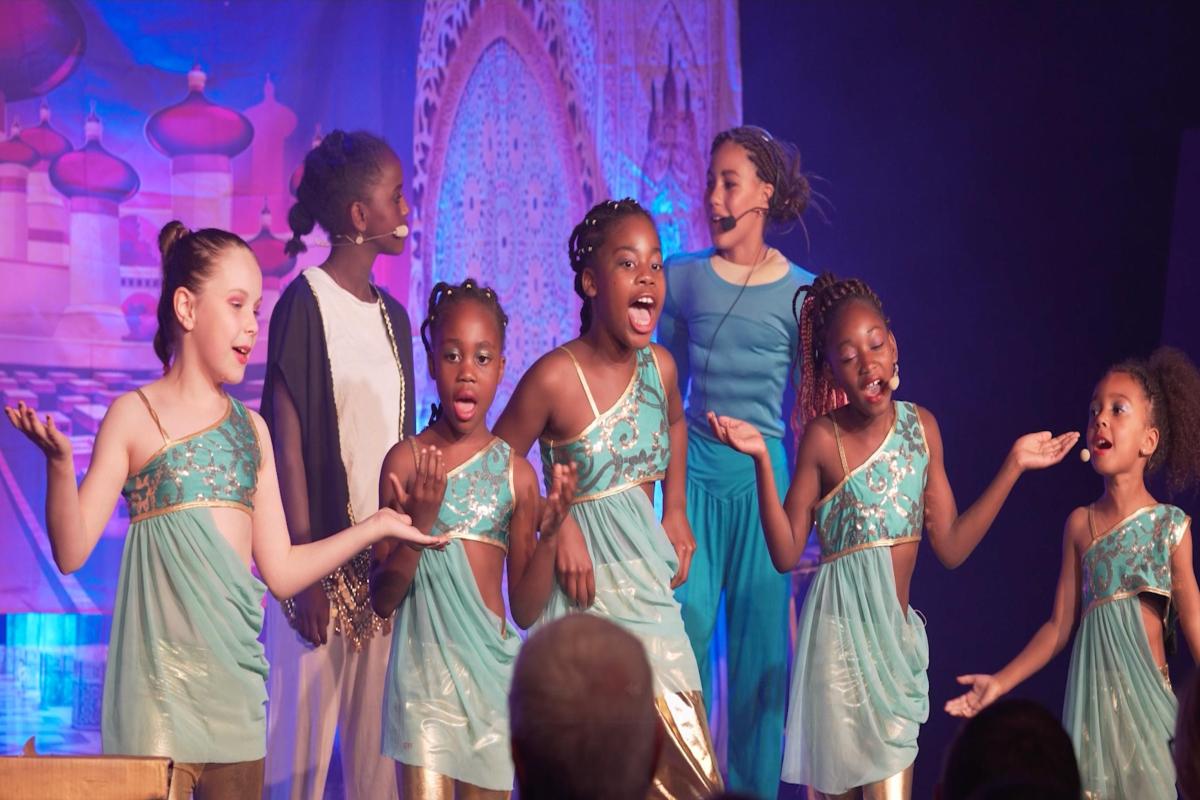
Stepping onto the stage is the culmination of months of work. It is the moment when stage fright turns into positive adrenaline. For many students, this moment is revelatory. Being under the spotlights, feeling the presence of the audience, receiving applause: it is a powerful validation of their efforts. The end-of-year shows organized by arts schools in Switzerland are magical moments where parental pride meets student fulfillment. It is a celebration of shared pleasure and personal accomplishment.
Why Musical Theatre is Essential in 2026
In a school context where oral fluency has become paramount for exams and presentations, the skills acquired in acting and singing classes are major assets.
- Unshakeable confidence: Daring to express oneself in front of an audience helps overcome the fear of others' judgment.
- Stress management: Breathing techniques learned in singing are precious tools to calm anxiety.
- Memory and concentration: Retaining texts, lyrics, and choreographies stimulates the cognitive capacities of children.
- Liberated creativity: Improvisation and interpretation nourish the imagination, an essential quality in tomorrow's professional world.
Furthermore, this practice offers a break disconnected from screens, a return to the body and direct human interaction, which is vital for the balance of young generations.
Choosing Your Format: Weekly Classes or Holiday Camps?
Learning musical theatre can be done according to different rhythms, adapted to the needs and desires of each family.
The Regularity of Year-Round Classes
For deep and lasting progression, registration for a weekly class is ideal. It is a commitment over the year that allows for building solid foundations. In Lausanne, many students follow this curriculum to see their level rise month after month. These sessions, generally lasting between 60 and 90 minutes, allow for the installation of reassuring pedagogical rituals. It is the preferred format for preparing an ambitious show and for weaving strong social ties within the school. For those who also wish to develop their musical ear in parallel, an instrumental Music class can enrich this practice.
The Intensive Immersion of Camps
For those who prefer a concentrated discovery or an activity during school breaks, camps are a fantastic option. During the holidays, these intensive weeks allow for total immersion in the world of musicals. It is often the occasion to mount a short but intense project. These Holiday camps are available in several cities like Geneva, Lausanne, or elsewhere in French-speaking Switzerland. The atmosphere is often electric, full of laughter and challenges met in a few days. It is an excellent entry point before confirming an annual registration.
Practical Information: Rates, Locations, and Accessibility
Embarking on the adventure requires a little organization. Here are some benchmarks to guide your choice in French-speaking Switzerland.
Understanding Rates in CHF
Investing in quality artistic training has a cost, which reflects the expertise of the teachers and the resources implemented (equipped rooms, sound equipment, costumes). The price of classes varies, but generally, one must count on a monthly budget. To give an idea, rates can start around CHF 79.- per month for the youngest, evolving according to duration and level. Weekly camps have a flat price, often between CHF 290.- and CHF 500.- depending on the formula. It is important to view this as an investment in the personal development of the child or adult.
Where to Practice in French-speaking Switzerland?
The offer of schools and workshops is vast. Lausanne remains a nerve center for regular classes, with infrastructures adapted to the performing arts. For families residing in Geneva or neighboring cantons, holiday camps offer appreciable flexibility. Whatever the location, make sure to choose a structure that values the pleasure of learning as much as performance. Professional and benevolent training will make all the difference in the experience lived by the student. Do not hesitate to visit the premises before registrations to feel the atmosphere.
Individual Coaching: A Relevant Supplement?
Although the essence of musical theatre is collective, individual coaching can bring precise added value. Some students feel the need to work on a particular technical point, such as vocal belting or the fine interpretation of a monologue.
However, emotional pedagogy prioritizes the group. It is in contact with others that we learn the most about ourselves. The benevolent gaze of classmates during a workshop is often the best encouragement. For students with an insatiable thirst for learning, it is possible to diversify pleasures. For example, stimulating visual creativity via a Visual arts class can nourish the imagination necessary for the stage. Interdisciplinarity is a richness: everything learned in one artistic domain nourishes the others.
Signing Up: The First Step Towards the Adventure
The desire to join a musical theatre troupe often comes from a crush: a movie, a show seen with the family, or simply overflowing energy to channel. It is important to listen to this desire.
Registrations for the following school year often open in the spring, but it is sometimes possible to join groups during the year depending on available places. For camps, anticipation is key, as places go fast approaching the holidays. Whether you are the parent of a shy child or an extroverted teen, or an adult looking to reconnect with their creativity, the door is open.
Do not let the fear of not having the "level" hold you back. Musical theatre is there to teach you, not to judge you. Each class is a step, each show a victory over oneself. Apolline Ecole d'Arts embodies this philosophy by offering a structured and warm setting to discover these disciplines in Lausanne, Yverdon, and Etoy.
In conclusion, choosing musical theatre means offering yourself or your child a precious gift: the freedom to be oneself, under the benevolent light of the spotlights. It is a school of emotion, rigor, and sharing that leaves imperishable memories. So, ready to take the stage?