
Key Takeaways: The Modern Role of Drama for Youth
Attention Regulation: According to the Current Trend Analysis of June 2026, theater stands out as a valuable clinical tool for regulating dopamine in children, offering a healthy and supportive balance against the constant overstimulation of screens.
Why Does Classical Theater Prepare Children for the Jobs of Tomorrow?
Learning the performing arts is undergoing a remarkable evolution today. It reconnects our children with their real physical expression while opening doors to highly stimulating careers of the future. Signing up for a drama class is no longer just about stepping onto traditional stage boards. It is an inner journey that develops presence, direct expression, and spatial awareness—qualities that are essential for navigating the world of new interactive media with confidence.
What does the acting of tomorrow look like for the youngest?
A modern drama class prepares young people for tomorrow's challenges by developing physical expression and diction, two essential pillars for dubbing and motion capture. This artistic training stimulates their emotional intelligence and offers them a healthy digital detox in a virtual world.
Far beyond the classical stage, creative industries are reinventing themselves through video games, animation, and virtual reality. To thrive in these new spaces, our young actors learn to combine the intensity of their physical presence with the wonderful agility of their voice.
Motion Capture: When Physical Expression Meets the Virtual World
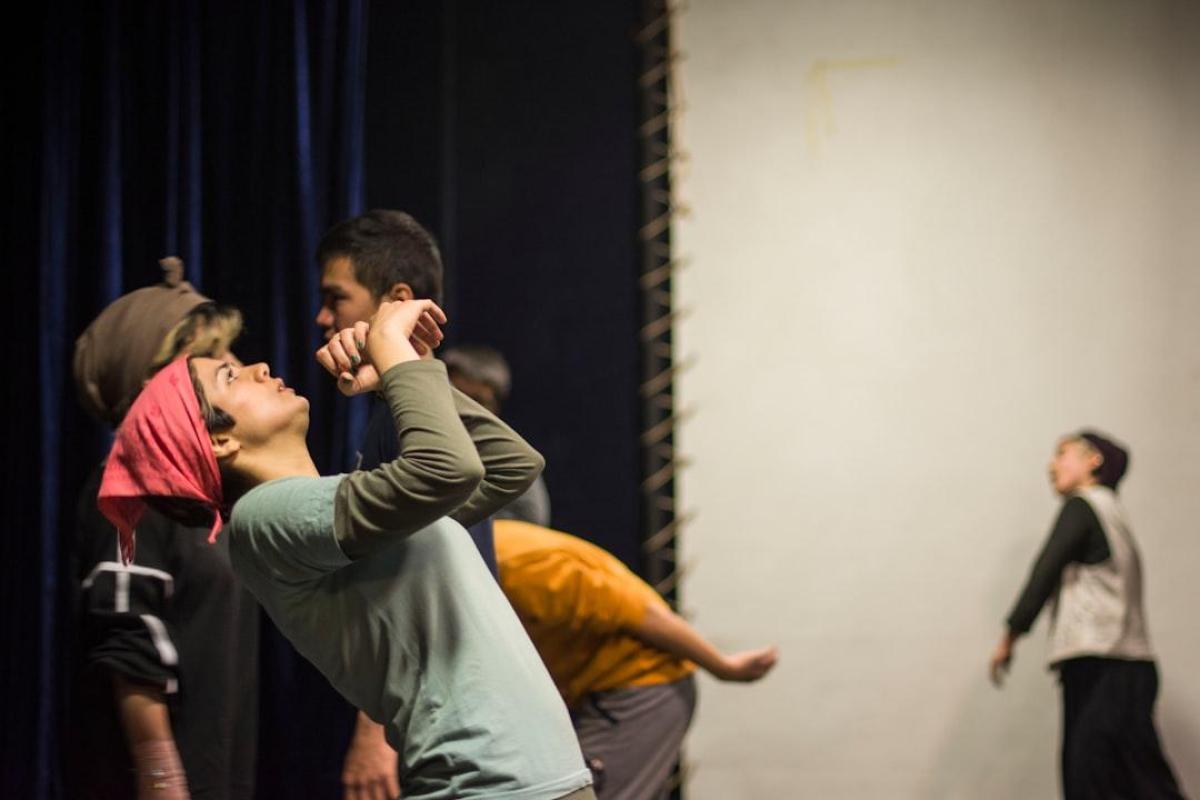
Motion capture requires actors to have total physical expression. To bring a virtual character to life, every gesture must carry sincere intent, without the option of relying on a camera close-up. This is precisely where the training offered in a children's drama class reveals its full value, allowing them to master three-dimensional space with ease.
According to analyses by Artistic Industry Trends, motion capture relies intimately on the principle of embodied cognition. This approach shows how much the entire body projects dramatic intention. A simple shoulder movement or a hesitant step is enough to express a sincere emotion without needing any artificial effects.
In a physical expression workshop, children learn to refine their gestures to translate anger, joy, or wonder globally. This motor control, both subtle and precise, is essential for digital animation. Motion sensors record every physical nuance to breathe life faithfully into virtual skeletons.
| Skill Acquired on Stage | Concrete Application in Motion Capture |
|---|---|
| Awareness of space and volume | Precise navigation within restricted virtual capture volumes. |
| Global physical expression | Translating emotions without relying on facial expressions. |
| Mastery of physical rhythm | Rigorous synchronization of movements with 3D physics engines. |
From Microphone to Studio: Dubbing and Voice Acting for Youth
Dubbing and voice acting require rigorous mastery of breath, rhythm, and intonation to bring a character to life authentically. Joining children's drama classes helps acquire this essential vocal agility to capture attention and move an audience without any visual aid.
The market for personalized digital content is growing rapidly. According to the 2026 Media Trends report, demand for young vocal talent capable of delivering natural, lively, and non-robotic performances is rising sharply.
Through fun diction and articulation exercises, children learn to pitch their voice and vary the intensity of their lines. This natural bridge allows a young actor to transition confidently from the warm stage of the theater to the microphone of a professional recording studio.
How to Choose Your Drama Class?
Choosing the right artistic path for your child means prioritizing balanced programs that harmonize the joy of physical play, voice work, and personal growth. The guidance must always adapt sensitively to each age group to encourage creativity without ever imposing performance pressure.
To guide families through this wonderful process, here are some essential criteria to analyze when asking: how to choose a drama class?
- Educational balance: The ideal program must integrate improvisation to stimulate spontaneous responsiveness, voice work to introduce dubbing, and physical movement to master space.
- Age adaptation: A drama class for children aged 6 to 10 should focus on playful discovery, while a drama class for youth and young teenagers will guide the student toward more advanced acting techniques.
- A supportive environment: A good drama class for beginners must offer a safe, nurturing space. It is a reassuring environment where mistakes are seen as a joyful and natural step in learning, essential for building self-confidence.
Apolline Art School's Approach: Cultivating Real and Virtual Presence
In a context where the virtual world is playing an increasingly important role, developing physical presence and emotional intelligence is fundamental. Artistic training focuses on the essential preservation of human contact, listening, and spontaneous empathy.
According to the 2026 User Search Analysis, there is a significant increase in searches by parents wishing to preserve natural empathy and eye contact in their children in the face of the proliferation of digital avatars. It is precisely in this human dynamic that Apolline, an art school attentive to the overall development of each student, comes in.
The school offers a variety of workshops tailored to all artistic aspirations. For young stage enthusiasts, the Lausanne drama class (also taught in Yverdon and Etoy from age 6) teaches the classical basics of acting. We also offer Drama Classes focused on musical theater for 8 to 14-year-olds. Rates for these weekly workshops start at CHF 79 per month for a 60-minute class, CHF 89 for 75 minutes, and CHF 99 for 90 minutes.
For children attracted to other forms of expression, Apolline diversifies its programs by offering Visual arts classes from age 6, including drawing, painting, and comics, as well as a highly popular Manga class. These workshops are available in several Swiss cities such as Geneva, Lausanne, Vevey, Sion, Neuchâtel, and Fribourg. Music classes are also available in Lausanne from age 4 (singing, guitar, piano, drums, bass). During school holidays, the school organizes themed workshops and Holiday camps throughout French-speaking Switzerland starting at CHF 290 per week, offering an ideal opportunity to learn acting techniques in a joyful atmosphere.
FAQ: Preparing for Tomorrow's Skills Through Drama
What transferable skills go from theater to dubbing?
Theatrical play develops breath control, diction, voice projection, and the ability to convey sincere emotions solely through intonation. These skills allow young actors to quickly adapt to the technical requirements of a dubbing recording studio.
Does theater really help with motion capture?
Yes, because motion capture requires excellent physical and spatial awareness, often referred to as embodied cognition. The physical exercises in a children's drama class teach how to project clear emotions through global body movements, which is essential for faithfully animating virtual characters.
At what age can you start a drama class for beginners?
It is entirely possible to start at age 6, an ideal period when children develop their socialization and spatial awareness. Educational structures like Apolline offer a perfectly adapted drama class for beginners, designed to lay the foundations of stage acting in a fun and supportive way.
Why is theater considered a digital detox?
Theater requires immediate physical presence, real-time interactions, and constant eye contact with acting partners. According to the Current Trend Analysis of June 2026, this collective practice stimulates natural empathy and acts as a healthy tool for dopamine regulation, contrasting with the passive hyperstimulation of screens.