
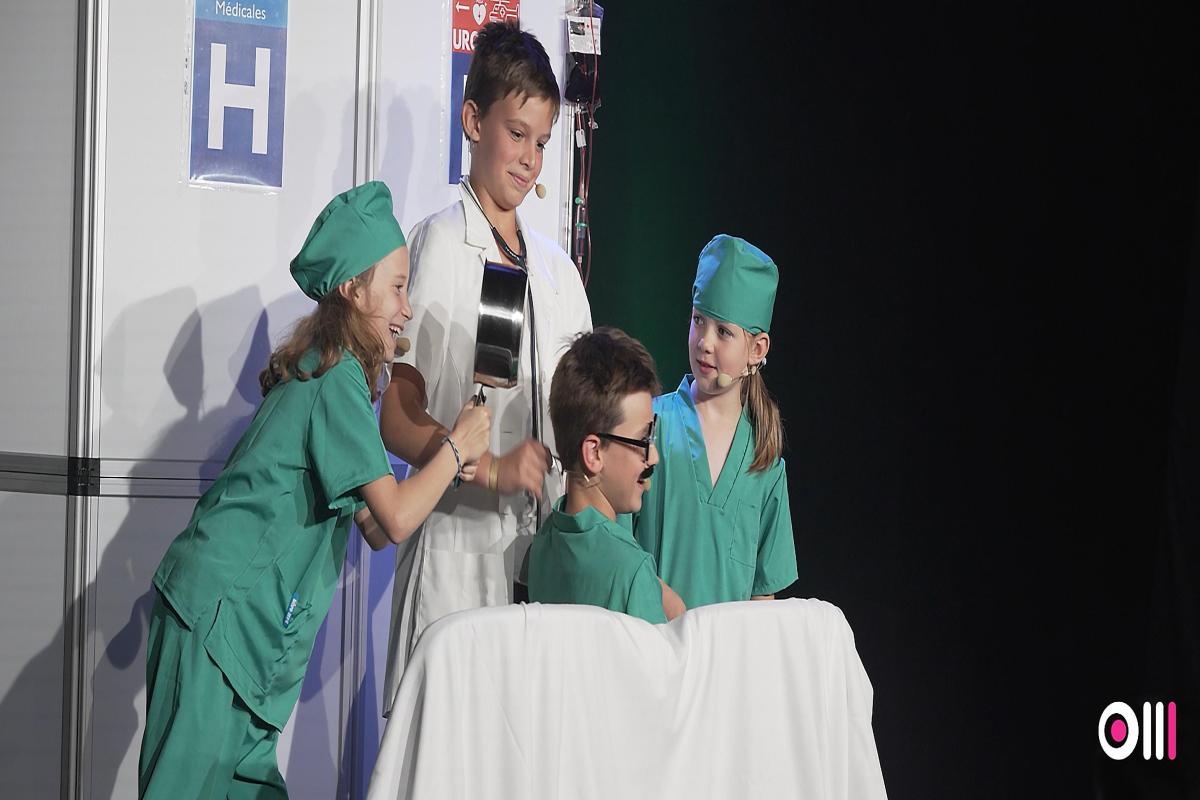
If you live in the **Morges** region, you undoubtedly know the cultural excitement surrounding the **Beausobre** Theatre. It is often there, in the heart of the **audience**, that it all begins. Your **child** observes, fascinated, the lights flooding the **stage**. They feel the vibrant energy of the **show**. It is a suspended moment, pure emotion. Then comes this question, often asked on the way home: "And me, could I be up there?".
If you live in the **Morges** region, you undoubtedly know the cultural excitement surrounding the **Beausobre** Theatre. It is often there, in the heart of the **audience**, that it all begins. Your **child** observes, fascinated, the lights flooding the **stage**. They feel the vibrant energy of the **show**. It is a suspended moment, pure emotion. Then comes this question, often asked on the way home: "And me, could I be up there?".
In this month of November 2025, this question is the starting point of a wonderful educational adventure. Transforming this spectator's dream into an **actor**'s reality requires benevolent guidance. For **children** as well as for **teens**, passing to the other side of the mirror and joining an artistic practice **workshop** is a structuring step. It is not just about learning a text, but discovering how one's own voice resonates within a **group**.
Our region, ideally located near **Lausanne**, offers fertile ground for these discoveries. Choosing the right **school** is essential. It is where the **pleasure** of acting meets the rigor of **work**. It is a **space** where one learns to grow, supervised by professionals, with a quality of teaching worthy of the best institutions in **Lausanne**, but right close to your home.
Understanding the Desire to Act: From Emotion to Interpretation
Why does your **child** feel this compelling need to do **theater**? Pedagogically, it is often a response to a need for expression. School or home are places of necessary rules, but the **workshop** is the place of possibilities. Here, they can explore varied **emotions**: the anger of a king, the joy of an elf, or the sadness of a hero. This **interpretation** of characters allows for releasing tensions and channeling overflowing energy.
Unlike **adults**, often held back by the gaze of others, **children** possess a natural key to open the door to imagination. Our role is to guide this spontaneity. During the **year**, the **work** in **class** allows this abundant creativity to be structured. They learn that the **stage** is a demanding framework where freedom is born from mastery.
For **teens**, the process is often linked to self-construction. **Acting** becomes a secure social laboratory. The **experience** of the stage proves to them that they are capable of captivating an **audience**, making them laugh, or touching them. It is a powerful engine for self-esteem. Often, it is at this pivotal age that interest in **musical theater** or **improvisation** becomes clearer, soliciting at the same time the **voice**, the **body**, and the mind.
Key Skills: Confidence, Voice, and Collective Ease
Enrolling your **child** or teenager in theater **classes** near **Morges** is a major educational investment. The skills developed in our **workshops** are tools for life. Self-**confidence** is the first to grow. Daring to take one's place, daring **public speaking**, daring to make mistakes and start over: this is the pedagogical daily life of the apprentice actor.
Instrumental Mastery: Body and Voice
The **body** is the **actor**'s primary tool, well before the costume. In our **workshops**, we guide students to fully inhabit their posture. For a reserved **young person**, projecting their **voice** to be heard without shouting is an immense personal victory. This oral ease is a direct asset for the **school** journey, especially for oral presentations, whether in schools in **Morges** or gymnasiums in **Lausanne**. **Adults** know how precious this skill is in the professional world; acquiring it through play is the gentlest and most effective method.
The School of "Living Together"
**Theater** is never practiced alone. It is an art of connection. **Group** **work** is at the heart of our pedagogy. **Children** learn active listening and solidarity. In **improvisation**, they discover that one must accept the other's idea to build a story. This dynamic creates solid friendships, different from those at school. In a society that is sometimes individualistic, finding this human connection with other **young people** and referring **adults** is essential for social balance.
Theater as a Partner in Academic Success
We sometimes wrongly oppose artistic **activities** and serious **school** work. In reality, they are complementary. The practice of **theater** solicits memory, concentration, and rigor. Learning a text requires sustained intellectual **work**. Character analysis nourishes literary understanding, helping the **teen** grasp the nuances of a work much better than a simple reading in class.
Teachers in the region, from **Morges** to **Lausanne**, often note that a student practicing **theater** manages stress better. The "stage fright" before entering the **stage** is similar to the apprehension before an exam. Learning to transform this fear into positive energy is a lesson that **children** carry with them into their lives as **adults**. It is a mental preparation that goes beyond simple **artistic** practice.
Exploring Modern Forms: Improvisation and Musical Theater
While the classical repertoire is formative, modern forms fascinate the **young people** of **Morges**. **Improvisation** is true gymnastics of the mind. It teaches reactivity and adaptability, essential qualities in the current world. It is a **school** of the present moment where mistakes become a playing opportunity.
For complete profiles who love to sing, **musical theater** is the ideal activity. It requires complex coordination: singing, dancing, and acting. Our **courses** integrate these disciplines to offer global training. This allows each **child** to reveal their unique potential. Your child may have a powerful **voice** or an unsuspected comic gift. The **workshop** is the laboratory where the pedagogical **manager** helps these talents bloom.
The variety of **activities** allows every **beginner** to find their path. Whether they wish to explore drama or **comedy**, there is a suitable **course**. The final objective, the end-of-**year** **show**, federates the **group** around a common goal, requiring commitment and perseverance.
Organization and School Life: A Rich Season
Committing for a **year** requires organization. Weekly **classes** rhythm the **season** and quickly become the favorite moment of the week for **children**. For parents in **Morges**, proximity is a key criterion. It is crucial to find an accessible **school**, with schedules thought out to harmonize with the **school** rhythm.
The highlight of this **work** is the encounter with the **audience**. Seeing your **child** on **stage**, transformed and radiant, is a priceless reward for **parents**. It is the moment where one concretely measures progress in diction and assurance. This moment of sharing remains engraved in family memories.
For those who hesitate before signing up for the year, **camps** during **holidays** are an excellent option. These intensive weeks allow testing the activity and seeing if the **child** integrates well into the **group**. It is also a smart childcare solution, very appreciated by active families between **Lausanne** and **Morges**, looking to occupy their **young ones** constructively.
The Importance of Guidance by Passionate Adults
The quality of a theater **course** rests on its teachers. They are expert **adults** who transmit much more than a technique: they share a passion. Managing a **group** of **children** requires great psychological finesse. One must know how to encourage the shyest and channel the most energetic.
The course **manager** ensures that each student finds their place. In our **workshops**, there are no small roles. We teach that the success of the **show** depends on everyone's involvement. This empowerment makes **young people** grow, teaching them that their presence matters for the collective. It is a beautiful lesson in citizenship that prepares for **adult** responsibilities.
**Art** is a living transmission. Instructors create bridges with local culture, evoking plays performed at **Beausobre** or in the theaters of **Lausanne**. This is how the curious and knowledgeable **audience** of tomorrow is formed.
Proximity: An Asset for Morges Families
The **Morges** region is dynamic and families prioritize local **activities**. Although **Lausanne** offers many options, commutes can be heavy. Choosing a **school** located in the immediate area, like in Etoy, allows for optimizing family time. It is the perfect compromise: pedagogical quality equivalent to the conservatories of **Lausanne**, with the ease of access of the **Morges** region.
Practicing one's activity near home also allows the **child** to forge links with local comrades. **Parents** can thus organize themselves more easily for trips to **classes** or meet during performances. The community aspect is very strong in local **workshops**.
With flagship venues like **Beausobre**, the cultural offer around **Morges** is rich. It is natural that amateur practice develops there. Enrolling your **child** in a theater **course** is actively participating in this local life.
Theater: An Adventure Also for Adults
Let's not forget that **theater** also fascinates **adults**. Often, seeing the blossoming of their **children** on **stage**, **parents** say to themselves: "Why not me?". Whether for pure **pleasure**, to overcome shyness, or to improve **public speaking**, the motivations of **adults** are multiple.
Theatrical practice is beneficial at any age. It offers **adults** a playful parenthesis, a moment to let go far from professional stress and meet new people. Sharing this passion can create a beautiful complicity between **parents** and **children**, who then exchange on their **improvisation** exercises or their discoveries.
Attentive art **schools** often offer sessions or **camps** open to **adults**. This demonstrates that learning is a continuous process and that one can remain a marveled **beginner** whatever one's age.
Joining the Troupe and Starting the Experience
The start of a new **season** is the ideal moment for **registration**, but it is often possible to join a **group** during the year. For a **beginner**, crossing the door of a studio can be impressive. Reassure your **child**: benevolence is the golden rule. In a **workshop**, they will be welcomed with their singularities.
Take the time to exchange with the **school** **manager** to define your **child**'s desires. Do they lean towards **acting**? Are they attracted by the universe of **musical theater**? Does **improvisation** suit them better? This dialogue allows orienting the future student towards the most suitable **course**.
**Art** is a school of life. By offering your **child** access to the **stage**, you give them precious tools to express themselves and interact with the world. Whether they become an **actor** later or choose a completely different path, these skills will accompany them. From the magic of **Beausobre** to workshop practice, the path is one of sharing and humanity.
As of this November 28, 2025, opportunities to join this adventure are open. For those seeking this pedagogical excellence a few minutes from **Morges**, Apolline Ecole d'Arts offers theater and musical theater classes in Etoy for children from 6 years old, with an approach centered on fulfillment.