The Fear of the Blank Page: A Brake on Creativity in Lausanne
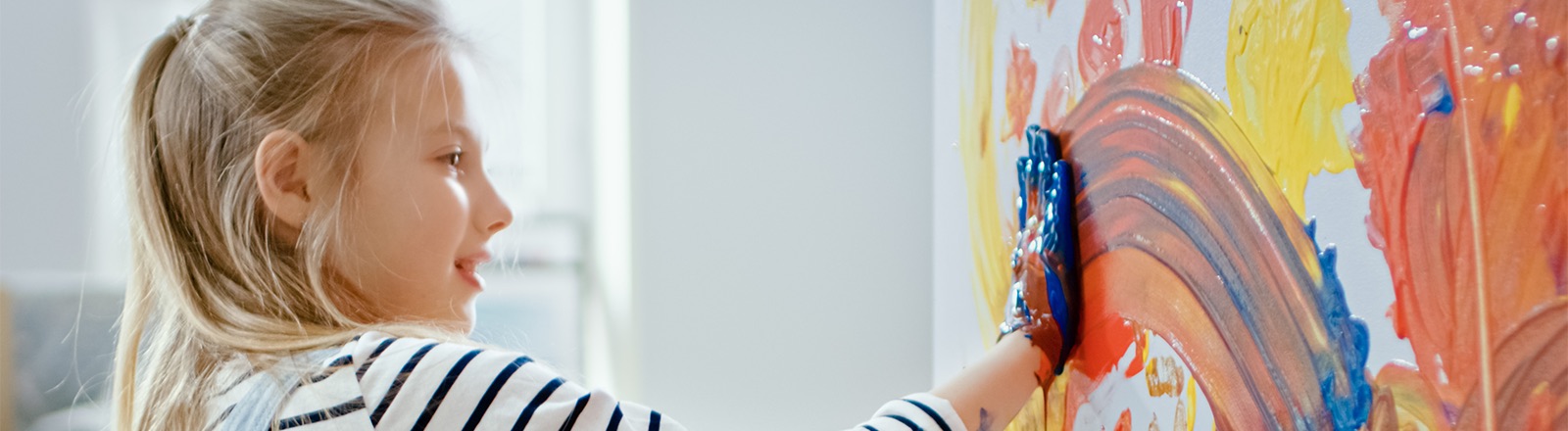
We have all felt, at least once, that slight shiver when putting pencil to pristine paper. This hesitation isn't just technical; it's deeply emotional. In Lausanne, a city of excellence and precision, the pressure to "do it right" the first time often paralyzes aspiring artists before they even begin. Yet, in the world of drawing and painting, immediate perfection is a myth that must be gently deconstructed.
In December 2025, as we all seek to slow down and find meaning again, it's time to change perspective. What if mistakes weren't failures, but the very engine of your progress? Learning a visual art isn't about drawing a straight line without trembling; it's accepting that the hand searches, the eye doubts, and the stroke corrects itself. Whether you are a parent looking for a course for your child or an adult in search of expression, understanding the value of mistakes is the first step towards creative freedom.
Children vs Adults: Two Hearts, Two Views on Failure
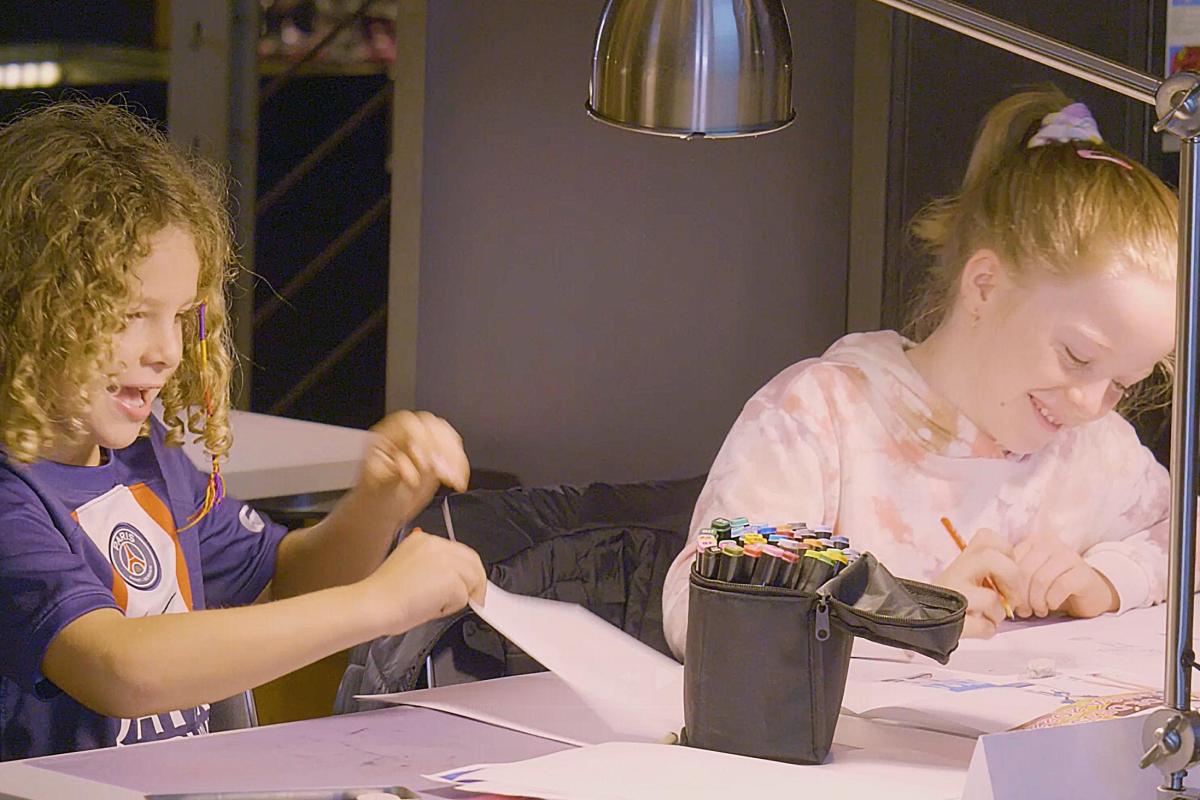
The relationship with mistakes evolves drastically with age, and our drawing courses in Lausanne reveal this daily. For children, the stakes are often linked to the gaze of others or school comparison. A child who frantically erases their manga character because "the eye is crooked" is expressing a need for immediate validation. In our studio, we teach them that the eraser is not a tool of shame, but an instrument of construction, just like the pencil.
For adults, the blockage is different. It often touches on self-esteem and the fear of having lost an innate ability. Many arrive saying: "I can't even draw a stick figure." Here, the **pedagogical** approach must be benevolent to unlock this restraint. Unlike the traditional school setting, a private art school offers this safe space where judgment is banished. **Levels** are not labels, but markers to **progress** at one's own emotional pace.
Choosing Your Technique According to Your Right to Make Mistakes
Not all techniques are equal in the face of repentance. Choosing your medium is also choosing the degree of letting go you are ready to accept. It is a decision that directly influences your artistic experience and your emotional comfort during creation.
Charcoal and Oil: The Champions of Resilience
If you are a complete beginner or afraid of freezing your mistakes, charcoal is your best ally. This volatile, almost living material allows you to build, erase, and reshape shadows infinitely. It is a technique that "forgives" everything and encourages broad gestures. Similarly, oil painting offers a long drying time that allows you to rework a color or shape for hours, or even days. It is ideal for deep work without stress.
Acrylic and Digital: The Right to Cover Up
For those who prefer to advance in layers, acrylic is fantastic. A mistake? Wait a few minutes for it to dry, and paint over it. It is a material that teaches resilience: nothing is ever lost, everything can be transformed. **Digital** art (tablet drawing) pushes this logic to the extreme with the "undo" function, very popular among teenagers who are fans of illustration. This is reassuring, but be careful: one must also know how to accept imperfection to give soul to one's work.
Watercolor and Ink: The School of Acceptance
Conversely, watercolor and ink manga require a certain boldness. Here, water cannot be totally controlled, and ink cannot be erased. It is a school of life: learning to make do with accidents, to transform an unforeseen stain into a creative opportunity. It is often difficult for a beginner, but it is also the royal road to developing unshakable artistic confidence.
Weekly Courses or Holiday Workshops: When to Explore?
How you organize your learning also affects your management of failure. In Lausanne, life rhythms are intense, and it is crucial to choose a format that respects your energy.
- Weekly courses: This is the format of gentleness and regularity. Week after week, you build a relationship of trust with your teacher and with your own hand. It is ideal for acquiring solid skills without pressure, accepting that some sessions may be less productive than others.
- Holiday workshops: During school holidays, the atmosphere changes. It is the moment to explore intensely, to make mistakes joyfully on a short project. A workshop offers a time bubble where one often dares more, because the commitment is limited in time. It is an excellent way to test pastel or urban sketching without committing for the year.
The Role of the Teacher: Guiding Without Judging
We often think we can learn alone through videos, or with a private tutor at home. But the energy of a collective studio is irreplaceable. Why? Because seeing your easel neighbor struggle, fail, then succeed, is incredibly guilt-relieving. The role of the teacher, or the instructor for the younger ones, is not to point out the fault, but to show the path that the mistake has opened.
A good visual arts teacher knows how to transform "it's failed" into "it's interesting". This reformulation is at the heart of our pedagogy. It allows the student, whether in a group of children or adults, not to shut down. Teaching then becomes an emotional dialogue where technique serves personal expression, and not the reverse. This is human expertise that online training can never reproduce.
Practical Information to Start in Lausanne in 2026
Crossing the threshold of an art school is a courageous act. In Lausanne, the offer is rich, but it is essential to find a place that values the process as much as the result. To give you a concrete idea, rates for quality guidance generally hover around a few dozen CHF per hour, an investment for your mental well-being as much as for your technique.
Materials are often included or advised with precision to avoid unnecessary expenses. Whether for academic drawing, expressive painting, or narrative illustration, the important thing is to start. At Apolline, we see students every day transform their fear of doing wrong into a pure joy of creating, proving that art is accessible to all who dare to try.
Conclusion: Your Next Mistake Will Be Your Greatest Success
As the end of 2025 approaches and resolutions are being prepared, don't be afraid to waste paper anymore. Each crumpled sheet is proof that you dared to explore a new path. Drawing and painting are not disciplines reserved for a talented elite, but universal languages that are learned with patience and humility. In our studios, every crossing-out tells a story, every "wrong" color vibrates with true emotion. So, pick up your pencils, breathe, and allow yourself to be imperfect. That is where art begins.