Finding Your Drawing Style: The Guide to Revealing Your Artistic Identity
Committing to an artistic practice is much more than a simple hobby; it is a profound exploration of oneself, a way to translate one's emotions into colors and shapes. As we reach the end of 2025, as the digital world accelerates, the need to return to tangible materials and authenticity is felt strongly. Whether you are an enthusiast following a weekly course or a creative drawing at home, the question of style always eventually emerges. It is this unique "touch", this visual signature that makes your hand recognizable among a thousand.
Contrary to popular belief, style is not a mysterious gift reserved for an elite. It is the fruit of patient work, insatiable curiosity, and benevolent guidance. For beginners, this quest may seem intimidating, but it is actually structured by clear pedagogical steps. Through this guide, we will explore how drawing and painting courses act as talent revealers, whether for children, adults, or adolescents fascinated by the world of manga.
Finding one's voice in art requires audacity: the audacity to try, to fail, and to start again. From the rigor of charcoal to the fluidity of watercolor, each tool is a key to opening a different door of your imagination. The school and workshops are not just places of technical learning; they are transitional spaces where confidence is built. Together, we will see how to transform simple exercises into true skills, allowing everyone to flourish in their artistic practice.
1. Exploring Techniques and Materials to Discover Yourself
To know who you are as an artist, it is essential to taste everything. A well-equipped drawing workshop resembles a chemist's laboratory where every experiment counts. Confining yourself to a single tool from the start risks curbing your creativity. It is often through a new experiment that the click happens: the resistance of the paper, the smell of the paint, or the scratching of the lead become extensions of your thought.
Black and White: The Power of the Line
Everything often starts with stripping things back. In a fundamental drawing course, one learns to tame the line before thinking about color. Work with charcoal or black stone is a school of humility and observation. It forces the eye to decipher light, shadows, and volumes. This is a crucial step for any child or adult wishing to build solid foundations. This is where your graphic temperament is revealed: is your stroke incisive and energetic, or do you prefer the softness of blending and subtle grays? This first encounter with raw materials is often rich in emotions.
Color: Expressing Emotions through Watercolor and Acrylics
The introduction of color often marks a joyful turning point in the school year. Each coloring technique possesses its own pedagogical personality:
- Watercolor for letting go: This technique requires accepting the unexpected. Water guides the pigments, creating effects that one never totally masters. It is ideal for working on mental flexibility and lightness in illustration.
- Acrylics for construction: Opaque and quick to dry, it allows one to make mistakes, cover up, and start again. It is the medium of resilience, often favored in art schools for beginners because it de-dramatizes error.
- Oil for patience: Sensual and demanding, oil painting teaches the long game. The work of blending and glazing requires meditative immersion, ideal for artists seeking depth.
Manga and Illustration: Telling Stories
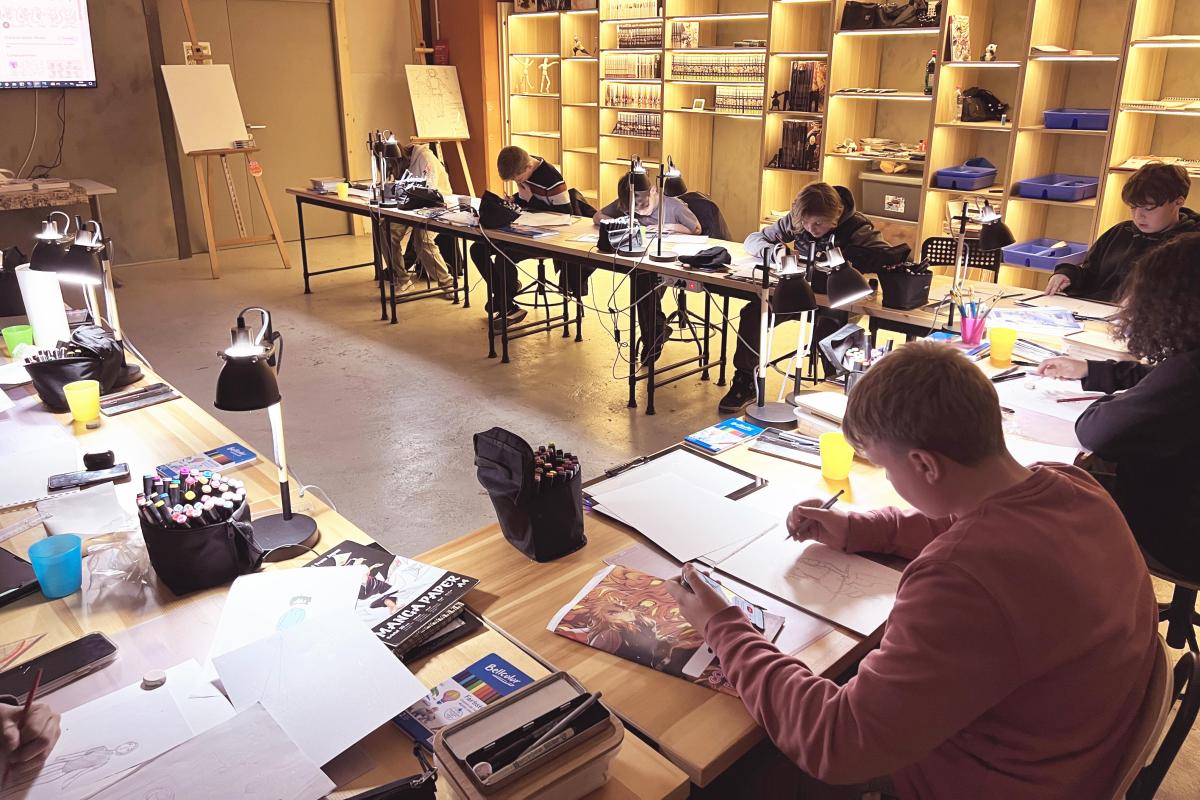
Manga is today a major gateway to artistic practice, particularly among young people. But be careful, following a manga course does not boil down to copying existing characters. The pedagogy aims to understand the codes (proportions, expressions, dynamism) to then detach from them. Many professional artists started with manga before evolving their style towards a hybrid illustration, mixing Japanese influences and Western realism. Having the right materials, such as alcohol markers or specific nibs, helps the student cross the threshold from amateurism to a more accomplished production.
2. Learning at Every Age: Children, Teens, and Adults
The approach to art evolves with maturity. A good teacher knows that they do not teach drawing in the same way to a 7-year-old child, who is in the immediacy of the moment, and to an adult who often seeks to validate their legitimacy. Understanding these life cycles is essential for a successful artistic education.
Artistic Awakening and Freedom for Children
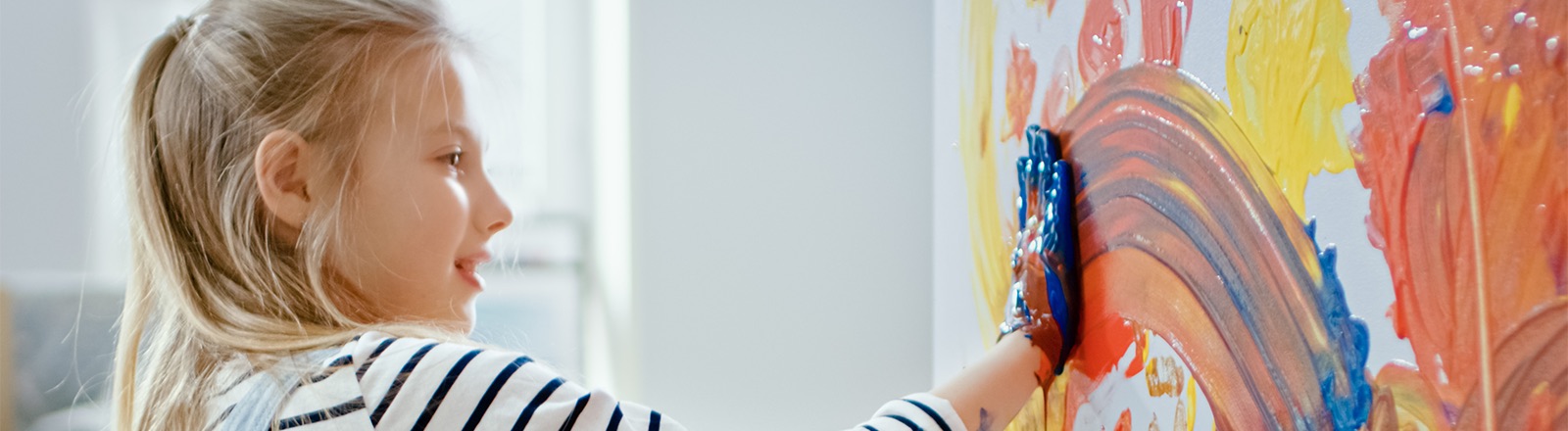
In children, creativity is a natural language. As soon as they are capable of holding a pencil, sometimes barely out of the baby stage where sensory awakening comes first, they trace to exist. In the school or extracurricular setting, the adult's role is to preserve this precious spontaneity. Drawing courses for the youngest should not be academic too soon; they must nourish the imagination. The child draws to tell their world, without filters. The art school then becomes a sanctuary where they learn to structure their visual thought while keeping their freshness.
Adolescence: The Search for Graphic Identity
Adolescence is a pivotal period where self-demand explodes. The teen no longer wants to draw "like a child", they want realism, technique, and style. Manga or concept art courses respond perfectly to this need for belonging and identity expression. It is also at this age that vocations are drawn. For those aiming for higher art schools, preparation for exams becomes a concrete objective. Acquiring solid skills (anatomy, perspective, composition) is indispensable for building a portfolio that reflects a unique personality.
Adults: The Pleasure of Rediscovery
For adults, returning to school or a workshop is often a courageous step. One must conquer the little inner voice that says "I don't know how to draw". Whether they are beginners or initiated, adults find in painting and drawing a space for mental breathing. Learning takes place in pleasure and exchange. It is also a wonderful activity to share: enrolling in a course as a couple allows you to discover the other in a new light, to share doubts and successes, transforming art into a common language within the family.
3. Choosing the Right Format: Classes, Camps, or Workshops?
The structure of teaching plays a capital role in the development of your style. Depending on your availability and temperament, different formats of learning can accelerate your progression. In 2025, flexibility is the norm, but anchoring in a regular practice remains the key to success.
The Strength of Weekly Courses
Enrolling in courses over the duration of a year offers reassuring stability. It is the ideal rhythm to install lasting habits. Week after week, the teacher accompanies the student, correcting a posture, suggesting a new technique, encouraging perseverance. This long-term follow-up allows one to cross the phases of discouragement inevitable in any artistic process. It is in this regularity that the student, child or adult, sees their work mature and their identity affirm itself. The end-of-year exhibitions organized by the schools value this journey traveled.
The Intensity of Holiday Workshops
Sometimes, one needs total immersion to cross a threshold. Workshops organized during school holidays are bubbles of intensive creation. Over several consecutive days, the mind does not leave the workshop. It is the dream format to tackle an ambitious project or discover a complex medium like oil or sculpture. In dynamic cities like Geneva, the offer of workshops is abundant, allowing participants to live an enchanted parenthesis, entirely dedicated to their passion, far from the distractions of daily life.
Practice at Home and Online
If the workshop is the place of guided learning, the home is that of appropriation. Setting up a corner dedicated to art at home is a strong signal sent to your brain: "here, I create". Although online courses can bring technical complements, nothing replaces the direct gaze of a mentor on your work. The ideal is often to combine the two: receive the technical and pedagogical impulse at school, and let it infuse through free practice at home, where one dares to experiment without witnesses.
4. Drawing Inspiration from Daily Life: Subjects and Themes
Having style is also casting a singular gaze upon the world. What do you choose to represent? The choice of your subjects says a lot about your sensitivity. Art does not consist only of reproducing, but of interpreting. This is why the education of the gaze is at the heart of all artistic teaching.
Learning to Observe Differently
Inspiration is everywhere for those who know how to look. Daily activities abound with visual poetry. Sketching the relaxed posture of a couple on a bench, capturing the expression of a baby sleeping, or studying the play of light on a cup of coffee: everything is a pretext for drawing. These observation exercises sharpen your eye and force you to make choices. Will you favor the purity of the line or the colored mass? It is in these micro-decisions that your identity as an artist is forged day after day.
Nourishing Oneself with Great Masters
One does not create ex nihilo. In painting courses, the analysis of works by great artists is an essential pedagogical step. Copying is not cheating, it is understanding. How did this painter solve this perspective problem? How does this manga author suggest speed? By digesting these influences, you enrich your own visual vocabulary. Museum visits and reading art books are precious tips that any teacher will give to their students to nourish their imagination.
Art as a Vehicle for Connection and Well-being
Beyond technique, art is a formidable tool for emotional connection. Drawing is one of the most soothing activities there is, allowing one to reconnect with the present moment. As a family, sharing a moment of creation around a table creates imperishable memories. Far from screens, parents and children dialogue differently. For a couple, offering themselves a time of common creation is cultivating a new complicity, where each reveals an intimate part of their personality through their aesthetic choices.
5. Tips for Progressing and Preparing for the Future
Progression in drawing is never linear. It is made of plateaus, doubts, and flashes of brilliance. Whether you aim for a professional career or personal fulfillment, certain pedagogical keys are universal to continue moving forward.
Consistency: The Secret to Success
Talent is an overrated notion; discipline is the true magic. Regular work always pays off. It is better to draw fifteen minutes every day than five hours once a month. Vary the pleasures so as not to saturate: alternate rigorous anatomy sessions (crucial for illustration and manga) with moments of pure freedom with watercolor or acrylics. This mental gymnastics between rigor and letting go develops deep and lasting levels of competence.
Preparing for Deadlines and Exams
For adolescents who dream of integrating prestigious art schools, the stakes are high. The preparation for entrance exams requires a specific strategy. A good portfolio should not be a collection of perfect images, but the story of a search. Juries look for personalities, not human photocopiers. Advanced courses help to structure this presentation, highlighting the diversity of skills acquired and the singularity of the gaze. It is a way to prove one's capacity to evolve and conceptualize.
The Humility of the Eternal Learner
Finally, remember that artistic teaching is an endless path. Even masters continue to learn. Keep the spirit of the beginner. If you are an expert in graphite, try oil. If you are comfortable with detail, try abstraction. It is by stepping out of your comfort zone that you discover new facets of your style. Accept mistakes as pedagogical gifts; they indicate what remains for you to understand. It is this open attitude that will make you a complete and fulfilled artist.
Conclusion: Dare to Affirm Your Singularity
Finding your style in drawing or in painting is a magnificent adventure that deserves to be lived fully. It is a journey towards oneself that requires time, love for work well done, and a stimulating environment. Whether you wish to accompany the awakening of your children, support a teen passionate about manga, or offer yourself, as an adult, a creative parenthesis, never forget that pleasure must remain the main engine. Do not be afraid to test all techniques, to use your brushes, and to fill notebooks. The courses, workshops, and classes are there to mark your route, provide you with adequate materials, and lavish essential tips so that your ideas come to life. Jump in, experiment, and leave your unique trace on the paper. For those looking for quality accompaniment in this process, Apolline Ecole d'Arts offers curricula adapted to visual arts for all ages in most cities in French-speaking Switzerland.