The Paradox of Connected Holidays in 2026
It is January 23, 2026, and as parents, we all share the same observation: screen management has become the major educational challenge of our time, particularly in Switzerland. The imminent arrival of school holidays often crystallizes a legitimate anxiety within the family. How can we guarantee our children and our youth a truly regenerating break while our own work pace does not slow down? The risk is great of seeing days off turn into marathons of video games or social networks, filling the void with passive digital consumption.
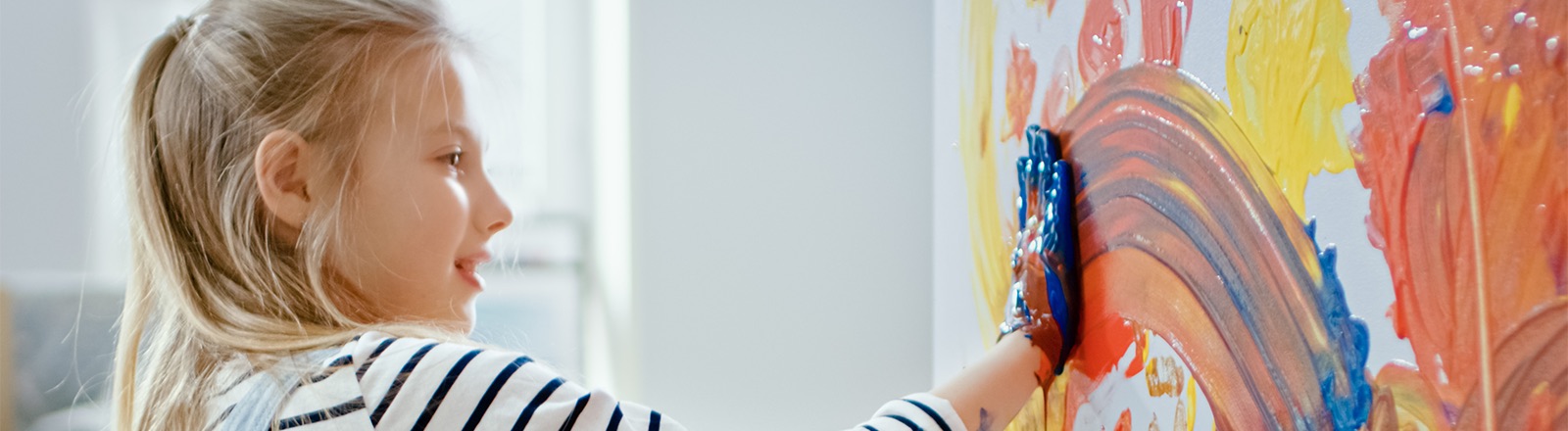
However, a powerful alternative is emerging in the heart of Geneva. Far from being a simple occupation, the intensive artistic creation camp imposes itself today as a necessary pedagogical response. It is not just about entertaining, but about proposing a positive "detox". These urban camps offer a precious opportunity: replacing the immediate dopamine of screens with the deep satisfaction of creating something with one's own hands.
In our city, the offer of activities has evolved to meet this need for reconnection. Beyond classic leisure, it is a true school of sensitivity that opens its doors during school periods. By choosing to enroll your child in such an experience, you offer them much more than an occupation: you give them the keys to rediscover the real world, interact with others without a digital filter, and build their self-confidence. This guide aims to accompany you, with kindness and expertise, in understanding what these moments can bring to the emotional development of your children.
Why Choose Art to Disconnect from Screens?
The question of the mental health of our adolescents is at the heart of current concerns. Recent studies confirm what we feel intuitively: active creation – whether drawing a Manga, projecting one's voice in theater, or sculpting – solicits brain areas that passive consumption of video games leaves fallow. A holiday camp centered on the arts is not a punishment depriving them of screens, it is an opening towards another type of pleasure.
Reactivating Concentration through Creative "Flow"
Unlike traditional school where attention is sometimes experienced as a constraint, an artistic camp favors the emergence of voluntary and joyful concentration, often called the state of "flow". During a whole week, participants dive into the heart of projects that genuinely passionate them. This learning by immersion is fundamental for restructuring attention spans. Artistic education teaches patience, nuance, and perseverance, qualities that the immediacy of the digital world tends to erode.
Imagine the pride of your teen who, instead of "scrolling" for three hours, spent that same time refining the expression of a character on their drawing board. It is here that the notion of fun takes on a superior pedagogical dimension: pleasure no longer comes from consuming content, but from personal accomplishment. For parents, observing this shift is often an immense relief.
Authentic Socialization: Renewing the Bond
Isolation is one of the traps of connected holidays. In centers dedicated to artistic practices, collective dynamics are unavoidable. Staging a theater scene, for example, requires total listening to the other, sincere empathy, and flawless collaboration. These human skills are essential for the future balance of our youth.
Within a workshop, social masks fall. It does not matter if the youth come from private institutions or the public system, they find themselves united by a common passion. It is a learning of "living together" that ideally complements the school curriculum. The absence of telephones forces them to look up, make eye contact, and weave bonds of authentic friendship, a relational richness that many families are actively seeking in Geneva.
Beyond Sport: An Inner Adventure in the City
When exploring camp options in Geneva, the reflex is often to turn to sport. Football, tennis, or climbing are excellent choices to expend energy. However, every child is unique. Some do not find fulfillment in physical competition or traditional sports adventure. For the child with a creative, sensitive, or simply curious profile, art represents an inner adventure just as intense and formative.
Art: A High-Level Sport for the Mind
It is essential to deconstruct the received idea that only sports allow one to "let off steam". A day of theater practice or intensive drawing is incredibly engaging, both physically and emotionally. The energy deployed to embody a character, memorize a text, or structure a complex perspective is considerable. It is a complete activity that mobilizes the body and the mind.
Furthermore, unlike certain activities dependent on the whims of nature or the weather, indoor artistic activities offer reassuring stability. Whether it pours with rain or is grey over Geneva, creativity knows no truce. It is a guarantee of serenity for family organization.
An Urban Alternative to Nature Camps
If immersion in nature has undeniable virtues, it does not correspond to all temperaments. Some youth feel safer and more inspired in the stimulating environment of a creative studio in the middle of the city. Artistic centers offer a benevolent setting where courage is not measured by the ability to climb a wall, but by the ability to express one's emotions in front of others. It is a different, intimate risk-taking that lastingly reinforces self-esteem.
This alternative also presents a major logistical advantage. While mountain sports often require long journeys, a camp in the heart of the city greatly facilitates family life. It allows reconciling an intense experience for the child with the parents' daily routine, while offering a richness of learning comparable to any other adventure. Self-transcendence is at the heart of the process: daring to try, accepting mistakes, starting over, and finally succeeding. It is the virtuous cycle of growth.
The Rhythm of a Typical Week in Geneva
For you, parents, understanding the architecture of a camp week is essential to project yourselves. The pedagogical objective is to find the perfect balance between a structuring framework and the freedom necessary for creativity, so that the schoolchildren do not feel "in class" while genuinely progressing. Here is how these privileged moments generally articulate themselves in Geneva.
Morning: Technical Immersion and Discovery
Days often begin with technical courses, carefully adapted to the level of each participant. Unlike weekly courses smoothed over the year, the camp format allows an immediate and deep dive into the subject.
- The Welcome: A staggered arrival time to allow parents to drop off their children serenely before joining their work.
- Learning Session: Discovery of fundamentals (anatomy for drawing, vocal techniques for theater).
- The Social Break: A crucial moment of informal exchange, without screens, to create bonds.
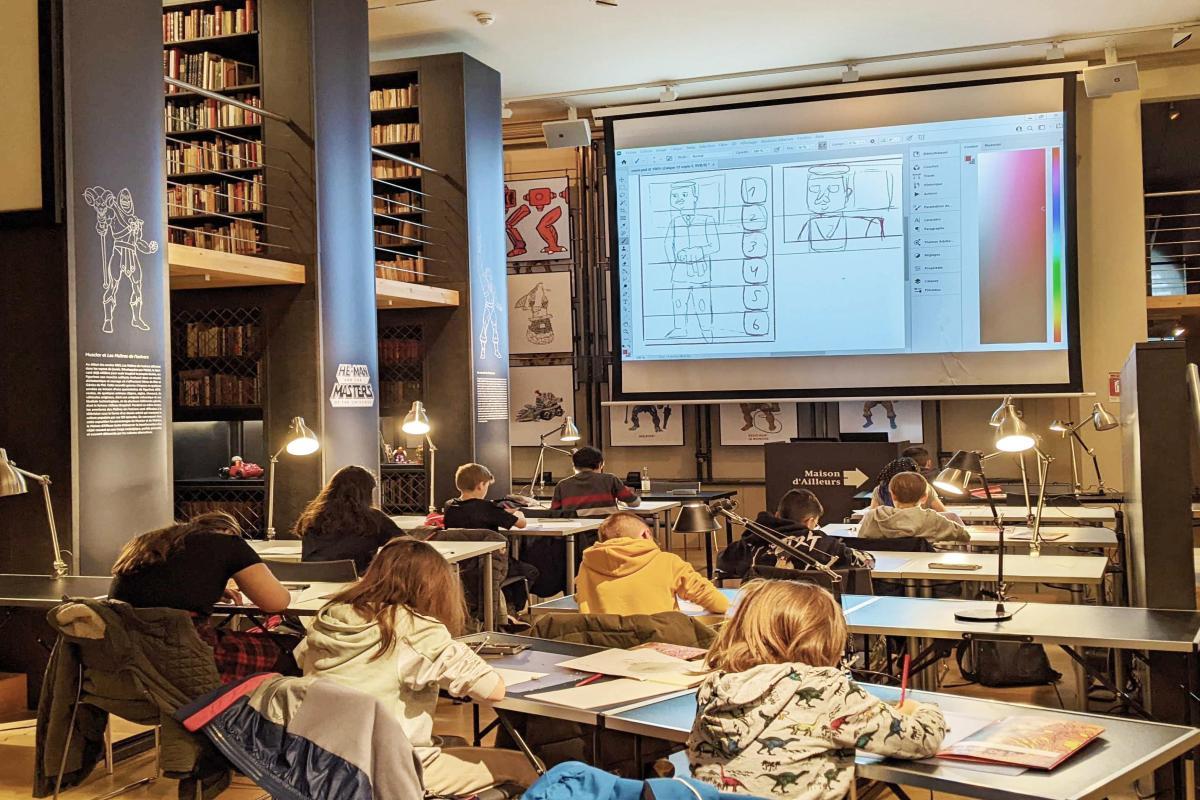
These morning sessions are supervised by passionate adults, pedagogues, and experts in their field. The art school then transforms into a true laboratory of experimentation where mistakes are welcome because they are a source of progress.
Lunchtime and Creative Afternoon
Care during the lunch break is a key point for your peace of mind. The children remain supervised, transforming the meal into a time of convivial and relaxed sharing. The afternoon then shifts towards the personal project workshop. Here, the student fully becomes an actor. They apply the techniques seen in the morning to bring their work to life or to rehearse the end-of-week show.
This rhythm is designed to respect the chronobiology of youth. After the intellectual concentration of the morning, the afternoon activity is intended to be more fluid, more collaborative. It is often in these moments that the fun takes on its full meaning and friendships solidify. The end of the day allows a return to calm, the children often returning tired, certainly, but with eyes shining with pride.
Manga, Theater, and Arts: Towards Autonomy
One of the most beautiful missions of these camps is to accompany the child on the path to autonomy. In artistic disciplines like Manga, painting, or theater, there is no "single answer" like in a math exercise. The young person must learn to make personal choices. Which color expresses my thought? Which emotion should I play? Which scenario to write?
Autonomy through Project Management
In drawing courses or multi-arts workshops, each participant becomes responsible for their material and the progress of their creation. This empowerment is gentle, progressive, but very real. In the space of five days, an adolescent can go from a vague idea to a finalized comic strip page. This process develops a major transversal skill: the ability to see a project through to completion. They learn to plan, overcome technical obstacles, and finalize a task.
Performing arts push this requirement even further. One must manage one's body, props, and above all, interactions with partners. It is a form of global learning that will serve your child well beyond the walls of the studio, in their future life as an autonomous adult.
The Pride of Tangible Results
At the end of the weeks of camps, there is almost always a concretization: an exhibition, a presentation, a filled sketchbook. Unlike the virtual successes of video games that vanish once the console is off, here, the young person leaves with tangible proof of their talent. This materialization of effort is a powerful driver of confidence. For a parent, seeing their child present their work with assurance is the most beautiful validation of this investment. It is proof that creative hobbies actively participate in the construction of personality.
This approach is particularly saving for adolescents in search of identity. The benevolent framework of the camps offers them a space of freedom to explore facets of their personality that they sometimes do not dare to reveal at middle school or orientation cycle.
Comparison: Residential Camps, Campuses, or Day Camps?
Faced with the multitude of options for holidays, the choice of format is decisive. In Geneva, the offer oscillates between the traditional residential summer camp, the large international campus, and the day camp. For many Geneva families, the day camp presents undeniable assets in 2026.
Flexibility Serving Family Life
The residential camp for holidays involves heavy logistics: departure, suitcases, sometimes difficult separation. While it suits some, the day camp is acclaimed for its flexibility. The children return to their bed at night, which reduces the anxiety of the youngest and allows parents to stay connected to their child's emotional experience. In the evening, around the family table, the story of the day becomes a precious moment of exchange.
Moreover, the complex question of accommodation is evacuated. This simplifies organization and lightens the overall cost. It is an ideal solution for parents who continue their professional activity in Geneva and are looking for intelligent care, aligned with office hours, without the constraints of overnight stays.
A Human-Sized Environment
Unlike huge structures like summer campuses that mix hundreds of students or large institutes like IIL that can impress by their size, specialized artistic camps choose proximity. Small groups guarantee personalized attention from the supervising adults.
In this cocoon, each child fully exists. They are not a number drowned in the mass. This proximity is reassuring, especially for a first camp experience. It also favors an enriching social mix, where students meet around a common interest, far from the usual school labels. Artistic camps create a bubble of benevolence conducive to personal fulfillment.
Practical Information: Registrations and Rates (CHF)
The practical aspect is the last step to concretize this educational project. Registrations for the 2026 camps are often open several months in advance, and demand in Geneva continues to grow. It is wise to anticipate to guarantee a place for your child in the group of their choice.
Understanding the Value of Your Investment in CHF
The rates of camps in Switzerland reflect the quality of professional supervision and the material made available. Expressed in CHF, these costs for a full week cover much more than simple daycare. They include hours of courses and workshop, attentive supervision at lunch, specific artistic material (often expensive for visual arts), and access to adapted premises.
It is important to perceive this as a lasting educational investment. An artistic camp led by passionate professionals sows seeds for the future. Also, do not forget to check if your supplementary health insurance or your works council participates in costs related to leisure and health activities for youth.
Insurance and Secure Framework
The safety of your children is our absolute priority. Each serious structure will ask parents to confirm that their child is covered by accident and civil liability insurance, in accordance with standards in Switzerland. Information regarding possible allergies or specific needs is essential and must be communicated during registrations.
The centers hosting these activities respect strict reception standards. Whether in Geneva or elsewhere in Romandy, the locations are selected for their accessibility and safety. This transparency on reception conditions and the qualification of contributors is the guarantee of seriousness that any family is entitled to demand to entrust what is dearest to them.
A Week to Grow and Flourish
To conclude, opting for an artistic camp during the next holidays in Geneva means offering much more than a simple parenthesis in the calendar. It means offering your child or your teenager a space of structured freedom, a refuge far from the pressure of screens, where they can reconnect with their innate creativity. It means transforming an ordinary week into a founding memory, woven with encounters, challenges met, and inestimable personal pride.
In our increasingly disembodied world, these tangible experiences are vital anchors. They actively participate in the emotional balance and development of your youth, preparing them to become no longer simple passive consumers, but the confident creators of tomorrow. As registrations are often taken by storm by parents conscious of these stakes, the time has come to plan this beautiful human adventure.
For those looking for recognized pedagogical expertise and a benevolent approach, Apolline Ecole d'Arts offers its artistic camps and workshops (Manga, Theater, Visual Arts) throughout Romandy, creating spaces where every child can express themselves freely.