Manga: Much More Than a Hobby, an Open Door to Art
As we reach the end of 2025, observing your children immersed in reading a manga is a familiar scene for many parents. But have you ever considered what would happen if they switched from reading to creating? Enrolling your child in a manga course is not simply offering them a pastime for the holidays or Wednesday afternoons. It is opening the doors to a true school of life and art. Beyond the panels and bubbles, manga is a demanding discipline that requires meticulous work, infinite patience, and developed artistic sensitivity.
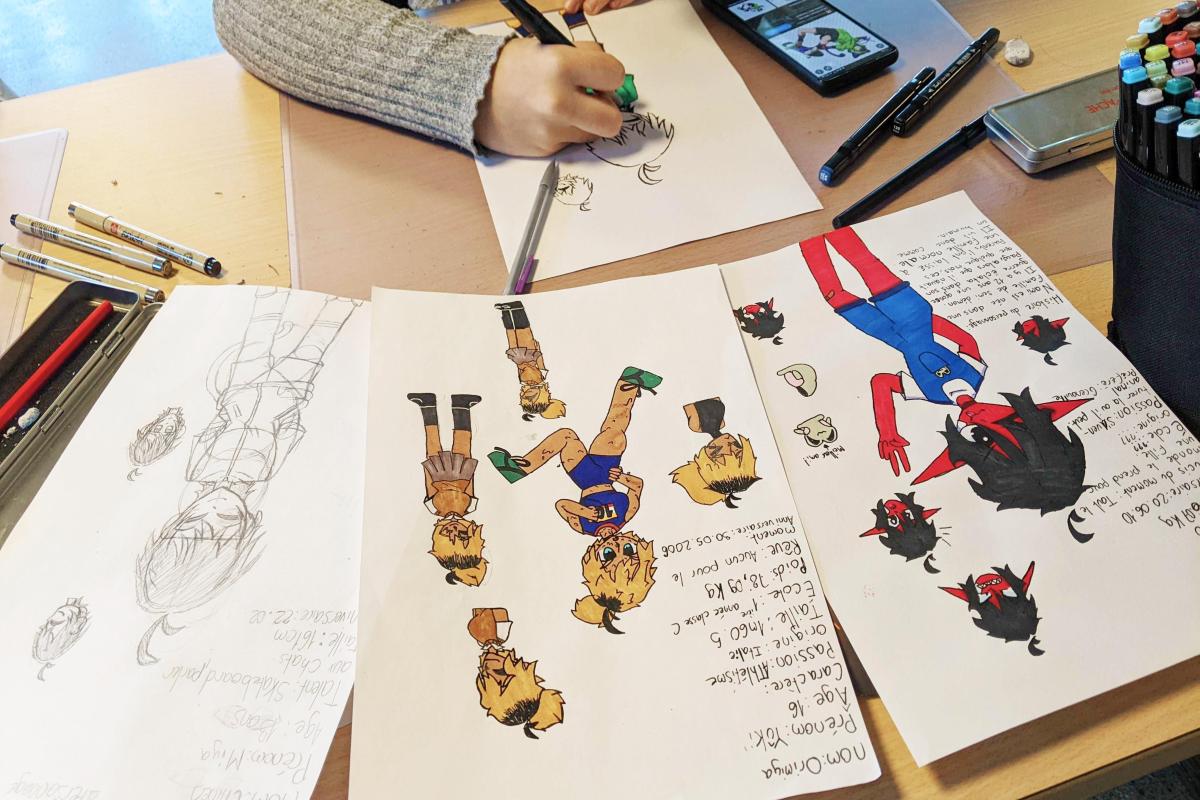
Contrary to popular belief that sometimes reduces this style to simple doodles, a structured manga workshop within an arts school offers a rigorous pedagogical framework. Here, we don't just copy; we come to learn to see the world differently. It is a complete immersion in varied graphic techniques, ranging from traditional material management to bold exploration of color via watercolor or acrylics. While the academic curriculum sometimes struggles to value creative talents, these courses offer a benevolent space where every year helps consolidate self-confidence through illustration.
A Technical Journey: From Sketch to Color Mastery
The excellence of a manga course lies in its ability to transform raw passion into tangible know-how. Learning often begins with the intimate relationship between hand and paper. Mastery of the line is fundamental: it must be alive, dynamic, capable of transmitting an emotion without a word. To achieve this, our students manipulate noble tools like charcoal, ideal for understanding volumes and shadows before even touching ink. This preliminary work in charcoal educates the eye and loosens the wrist, paving the way for more advanced techniques.
The Delicate Art of Watercolor in Manga
We often imagine manga only in black and white, but the world of Japanese illustration is rich in colors, especially on covers and artbooks. That is why we integrate watercolor at the heart of our pedagogy. Watercolor is a magical technique for children, as it teaches them to manage water and transparency. Mastering watercolor requires gentleness and anticipation. In our workshop, the student discovers how watercolor can create dreamlike skies or melancholic atmospheres typical of certain stories.
Unlike markers, watercolor is not always forgiving, but it offers results of unmatched poetry. Learning to dose watercolor pigments, to wait for drying, or to work wet-on-wet teaches precious patience. It is a moment of calm and intense concentration where watercolor becomes the vehicle for the child's emotions. The watercolor techniques learned here will serve well beyond manga, in all future artistic practices.
The Power and Modernity of Acrylics
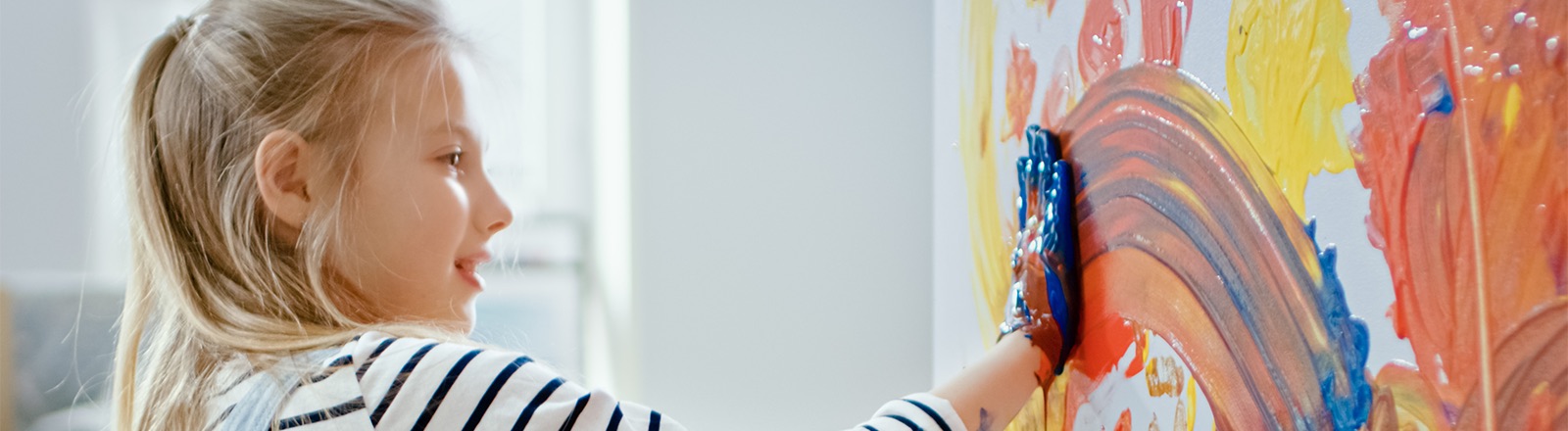
For more striking and modern results, the use of acrylics is unavoidable. Acrylics allow young artists to work with matter with more density. Where watercolor plays on transparency, acrylics offer an opacity that allows layering, correcting errors, and adding volume. It is a reassuring medium for a beginner, because acrylics dry quickly and allow building the image step by step.
In our courses, acrylics are often used to create impactful cover illustrations or complex backgrounds. Manipulating acrylics helps understand color theory: how to mix them to get the exact shade, how to create pure light. Acrylics are also a bridge to digital art: the way one applies acrylic paint closely resembles the use of certain digital brushes. By mastering acrylics on paper, the child acquires essential composition reflexes. The work with acrylics stimulates creative boldness, inviting them not to be afraid of bright color.
Oil and Material Rigor
Although less frequent in the rapid production of comic pages, oil painting is addressed for its invaluable theoretical value. Understanding how oil works – its slow drying time, its smooth blends – enriches the student's technical culture. Even if the child does not create an entire comic in oil, knowledge of this medium influences their way of perceiving light. Furthermore, material management is a key skill: cleaning oil or acrylic brushes, preparing watercolor paper, sharpening charcoal. This respect for material is an integral part of the professional artistic attitude we instill throughout the year.
A School to Grow: Pedagogy and Emotions
Enrolling in an art school to take a manga course means choosing a stimulating educational environment. The artistic education we offer goes far beyond drawing; it touches on personal development. To create a story, the child must show empathy, understand the emotions of their characters, and structure their thinking. These narrative skills reinforce their capabilities in the classic academic environment, notably in literature and organization.
The Importance of the Teacher and the Group
Nothing replaces the benevolent gaze of an experienced teacher. Unlike an impersonal video tutorial, the teacher is there to guide the gesture, correct an awkward perspective, or encourage a student doubting before their watercolor sheet. The teacher transmits not only techniques, but also a passion. Within the workshop, teaching also feeds on group dynamics. Students exchange advice, share their discoveries, and inspire each other. This collaborative learning is essential for developing open and generous creativity.
For older students, these workshops are also serious preparation for entrance exams to major art schools. Building a solid portfolio, demonstrating mastery of illustration, charcoal, acrylics, and storytelling, is a decisive asset. Our courses support these career dreams, transforming a teenager's passion into a concrete future project, with personalized advice to succeed in these demanding exams.
A Format for Every Pace: Holidays, Camps, and Annual Courses
We know that every family has a different schedule. That is why learning manga comes in several formats. The weekly course throughout the year remains the royal road for deep progression. It allows installing a work routine, seeing one's style evolve month after month, and forging lasting bonds with the teacher and other students. It is a regular date with one's own creativity.
The Intensity of Holiday Camps
However, school holidays offer a unique opportunity: the intensive camp. For a week, in Geneva or elsewhere, children live to the rhythm of artists. The camp allows total immersion in a project, like creating a short story or producing a large canvas in acrylics. These camps are accelerators of progress. The atmosphere is often buzzing, conducive to artistic breakthroughs that the academic rhythm does not always allow. Participating in camps is often a revelation for those who do not have time during the year.
While practice at home is encouraged for training, it does not replace the energy of the workshop. At home, space is sometimes lacking to spread out all one's watercolor or oil material, and distractions are numerous. Coming to a course or camp means treating oneself to a bubble of concentration dedicated exclusively to art.
An Activity for All Ages and Levels
The world of manga is vast and inclusive. Our schools welcome all profiles, from the absolute beginner who has never held a pencil to the average or confirmed drawer. Levels are designed so that everyone finds their place and progresses without pressure. It is never too late to find one's style. While our courses are very popular with young people, they also cater to the adult who wishes to reconnect with a forgotten passion or discover new creative activities.
A Moment of Sharing, Not Daycare
It is important to specify that manga requires a certain maturity. It is not an activity adapted for a baby. Unlike sensory awakening workshops for a baby, technical drawing requires fine motor skills and an attention span generally developed from 7 or 8 years old. Wanting to initiate a baby to the rules of perspective or the chemistry of acrylics would be counter-productive. However, manga can become a formidable adventure for the family. We sometimes see a creative parent-child "duo" emerge, or a pair of friends who sign up together to motivate each other. Sharing this activity as a duo, or as a pair, strengthens bonds and allows experiencing artistic teaching as a moment of rare complicity.
Ultimately, whether one comes to have fun, to prepare for exams, or to perfect one's style, the essential thing is the pleasure of creating. Mastering watercolor, taming acrylics, understanding oil theory, sharpening one's charcoal, or tracing a perfect line in ink are all personal victories. On this December 17, 2025, offering access to these noble techniques is the most beautiful gift one can give to a child's imagination.
For those residing in French-speaking Switzerland, our art school offers complete accompaniment with manga, drawing, and painting (watercolor, acrylics) courses adapted to all ages in Geneva, Lausanne, and other cities, as well as camps during school holidays.