
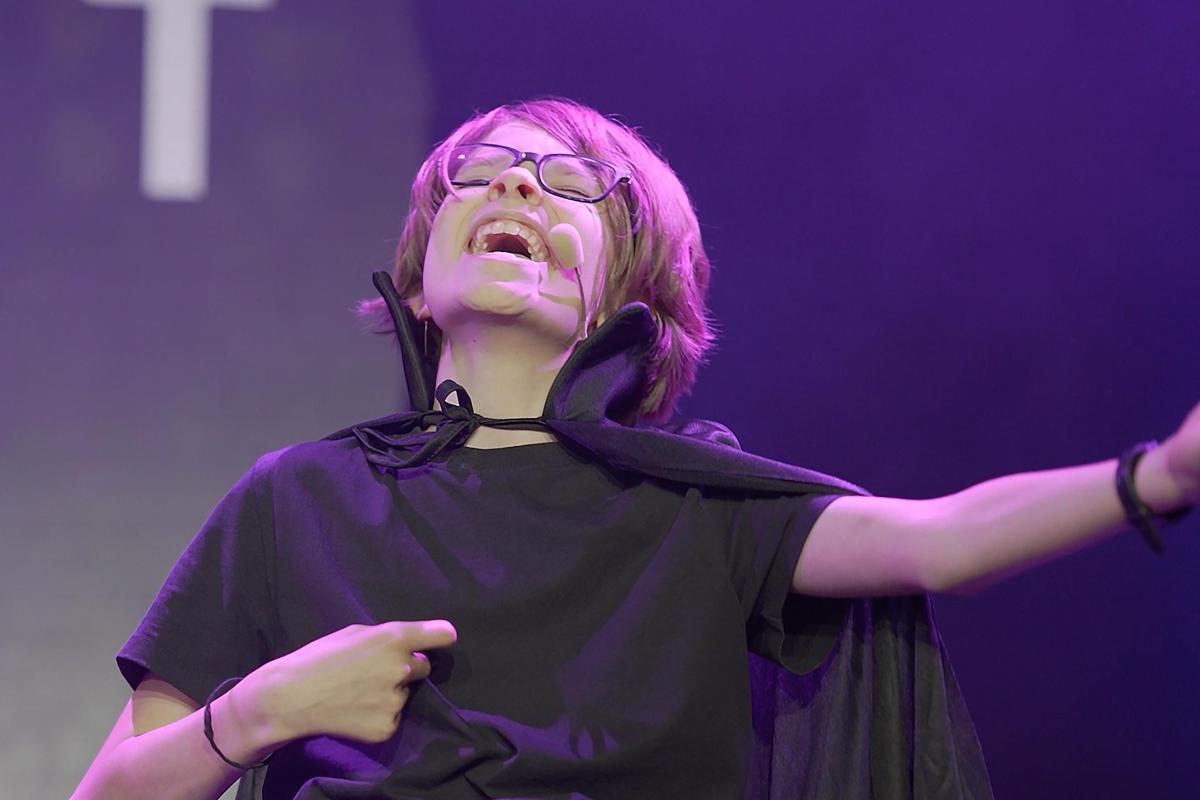
The Digital Challenge of 2026: Reconnecting Youth Through the Stage
As of December 13, 2025, the observation is shared by a vast majority of parents and educators: the virtual world has taken a preponderant, sometimes invasive, place in the daily lives of our young people. While technology offers incredible openings to knowledge, it also sometimes physically isolates our children in an algorithmic bubble. In **Yverdon**, as everywhere in French-speaking Switzerland, families are actively looking for solutions to offer their teenagers a solid anchor in reality, far from incessant notifications and the pressure of social networks. This is where **theatre** and drama **classes** come into play, not just as a simple leisure activity, but as a breath of fresh air essential for mental balance. The **registration** for a **theatre** **class** in **Yverdon** goes far beyond the framework of a classic extracurricular activity. It is an active educational and emotional step to help your **child** rediscover themselves. Far from being an obsolete practice, **theatrical** expression has become, at this end of the year 2025, one of the most powerful tools for the personal development of **young people**. In a dedicated and caring arts **school**, the student learns to exist by themselves, without a digital filter, within a **group** that supports them. This article explores in depth, with a pedagogical approach, why the **stage** is the best antidote to digital sedentary lifestyles and how specific **workshops** in **Yverdon-les-Bains** concretely transform the lives of adolescents. We will see how the rigorous **work** on the body, the voice, and **improvisation** prepares not only future actors, but above all fulfilled, empathetic, and confident **adults**.
1. Rediscovering the Joy of the Group and the Art of Improvisation
One of the first therapeutic and educational virtues of a **theatre** **class** is the fundamental rediscovery of the collective. Unlike online interactions, which are often asynchronous, partial, and superficial, **theatre** imposes an immediate and total presence. In a **workshop** located in the heart of **Yverdon**, **children** and teenagers must imperatively listen to each other, look each other in the eyes, and react in real-time to the emotions of the other. This **group** dynamic is the keystone for recreating authentic and lasting social bonds.
The Magic of Improv to Unlock Shyness
**Improvisation**, often familiarly called **improv**, is frequently the first step towards liberating emotional blockages. Without text to learn by heart initially, the **young person** must learn to trust their instinct and, above all, their acting partners. **Improv** is a true school of "yes, and...": one accepts the other's proposal without judgment and builds upon it. For a shy, introverted, or anxious adolescent, it is a transformative **experience**. On the **stage** of **Yverdon**, there are no fatal errors, only opportunities to bounce back. The pedagogical exercises of **improvisation** allow for breaking the ice quickly and defusing the fear of ridicule. They create a unique complicity and strong solidarity within the **company** of students. The **pleasure** of creating a story together, of making people laugh or moving them without a safety net, generates a satisfaction much deeper and healthier than that of ephemeral likes on social networks. It is an **art** of the moment that values spontaneity and collective creativity.
A Space of Freedom and Kindness
In a quality **theatre** **school**, the climate of trust is the absolute priority. The **workshops** are designed as emotional laboratories where one can experiment with different facets of one's personality in complete safety. Your **child** can in turn embody a powerful king, a wise beggar, a courageous hero, or a complex villain, thus exploring the richness of human nature. This **pleasure** of acting allows for the release of school tensions, exam stress, and personal anxieties accumulated during the week. In **Yverdon-les-Bains**, these **classes** often become the favorite "refuge" of the week for students, a sanctuary where they can drop the mask to better find themselves.
2. Mastering Body and Voice: The Actor's Tools
In the era of "text-neck" and slouching postures in front of screens, **theatre** offers indispensable somatic education. Being an **actor** is above all about fully inhabiting one's **body**. On **stage**, it is impossible to hide behind an avatar. The physical work done during **classes** in **Yverdon** helps adolescents to stand up straight, to occupy space with assurance, and to assume their physical stature.
Body Awareness in Action
The **body** is the artist's main instrument, their vehicle of expression. Warm-up exercises in the **workshops** aim specifically to unlock joints, firmly anchor feet in the ground, and fluidify movements. For an adolescent in full growth, often uncomfortable with their changing body image, learning to master their **body** is a guarantee of immense confidence. Physical **comedy**, the art of mime, or simply studying the gait of a character require a precision that reconnects the mind to physical sensation. In French-speaking **Switzerland**, and particularly in active and growing cities like **Lausanne** or **Yverdon**, sedentary lifestyles among teens are a major public health issue. **Theatre** proposes a dynamic and engaging alternative. It is not competitive sport, but it demands real energy, endurance, and tone. Playing an intense dramatic **scene** sometimes equals a real cardio workout, engaging every muscle!
The Voice: Carrying Your Message to the World
Parallel to the work on the **body**, the **voice** is worked on in depth and with finesse. How many adolescents mumble, dare not speak loudly, or have a tight throat? The **theatre** **class** teaches them pedagogically to project their **voice** without shouting, to articulate distinctly to be understood, and to modulate their intonations to transmit subtle emotions. These skills, acquired through classic or contemporary **theatre** texts, are directly transferable to daily life. Even if the student does not specifically destine themselves for **singing** or **musical theatre**, the musicality of speech is essential for effective communication. Knowing how to place one's **voice**, breathe from the diaphragm to manage stress, and master moments of silence are major assets for school presentations and, later, professional interviews. In **Yverdon**, teachers make it a point of honor that each budding **actor** finds their own frequency and dares to affirm their speech.
3. From Child to Adult: Learning Work and Rigour
We often think, wrongly, that **theatre** is only entertainment and lightness. This is a misconception. It is a demanding artistic discipline that requires **work**, concentration, and engagement. Moving from the status of a **child** playing spontaneously in their room to that of an apprentice actor preparing a structured **show** requires rigour. It is a gentle and supervised transition towards the responsibilities of **adults**.
Responsibility Towards the Partner
In a **troupe** or **group** of theatre, the notion of collective responsibility is central. If one of the students does not know their text, arrives late, or misses an entrance, the entire **scene** collapses and the work of others is impacted. This positive interdependence teaches reliability and respect for the other. The **young people** learn concretely that their individual **work** has a direct impact on the success of the collective. It is a magnificent lesson in citizenship through **art**. The preparation of a play requires perseverance over the long term, often over an entire school **year**, thus teaching the value of sustained effort. This notion of **work** is extremely rewarding for self-esteem. Succeeding in a complex **staging**, memorizing difficult speeches, coordinating movements with those of others provides an irreplaceable sense of accomplishment. The **workshops** provided in **Yverdon-les-Bains** do not only form artists, but individuals capable of fully investing themselves in a project until its final completion.
Stress Management and Relationship with the Audience
Facing the gaze of the **audience** is the ultimate and formative test of the journey. Stage fright is a normal, physiological emotion that even the greatest **adults** and professionals feel. Learning to manage it, to tame it, and to transform it into positive energy is an invaluable life skill ("soft skill") for the future. Whether for a large end-of-year **show** or a simple presentation in front of the class, the regular experience of the **stage** progressively immunizes against the paralyzing fear of others' judgment. The **experience** accumulated during rehearsals allows for de-dramatizing error and failure. If we make a mistake, we pick up, we adapt, we improvise, we continue. This resilience is essential in the current world, moving and uncertain. In **Yverdon**, students are encouraged with kindness to take artistic risks, always supported by their teachers and their acting comrades.
4. The Stage in Yverdon: A Unique Experience in French-speaking Switzerland
Why choose specifically **Yverdon-les-Bains** for these artistic activities? The city benefits from a growing cultural dynamic and quality infrastructures. Although geographically close to large urban centers like **Lausanne** or **Geneva**, **Yverdon** offers a proximity, safety, and quality of life that are felt positively in artistic education for families.
A Strong Artistic Network in Romandie
Quality schools do not operate in a vacuum. They are often part of a wider and structured pedagogical network encompassing key cities like **Morges**, **Lausanne**, and **Geneva**. This guarantees a high pedagogical level, continuous training of teachers, and enriching exchange opportunities. For example, a **school** having solid historical bases in **Lausanne** for **music** or **musical theatre** will bring this same rigour, methodology, and excellence to its **theatre** **classes** provided in **Yverdon**. The living **arts** circulate and nourish each other. A student enrolled in **Yverdon** benefits directly from the expertise of passionate teachers who have often trodden the boards throughout all of French-speaking **Switzerland**. The opening to the professional artistic world is total. Moreover, the city of **Yverdon** has cultural venues and **stages** adapted so that end-of-year **shows** take place in professional conditions (lights, sound, backstage), offering **children** a true immersion in the magic of live performance.
Beyond Theatre: Opening Up to Other Arts
Often, **theatrical** practice naturally opens the door to other complementary artistic disciplines. A **child** who gains confidence and ease on the boards can then become interested in **singing**, dance, **musical theatre**, or even visual arts (drawing, manga) to imagine sets or costumes. In **Yverdon-les-Bains**, the local cultural offer allows for creating these enriching bridges. Although some very specific courses like drums or piano are sometimes centralized in artistic hubs like **Lausanne**, the teaching of acting in **Yverdon** remains the central and accessible pillar of scenic expression. It is an invaluable chance for the inhabitants of Northern Vaud to have access to excellence in training close to home, without systematically having to travel to the Lake Geneva arc. The quality of local **classes** and **workshops** now rivals that of major cultural capitals, offering an ideal framework for fulfillment.
5. Practical Information: Registration, Prices and Camps
Are you convinced of the pedagogical and social benefits of **theatre** for your teen? Here is the essential practical information to take action at this end of the year 2025 or to serenely prepare for the start of the 2026 school year.
Understanding Rates and Registration
The financial investment in a weekly **class** remains very accessible regarding the benefits brought. In general, the **prices** for high-quality group courses in **Yverdon** and its surroundings start around 79.- **CHF** per month. This rate generally includes supervision by qualified professionals, rental of the adapted room, and necessary pedagogical material. For a **registration**, it is strongly advised to act early, because places in groups organized by age (children vs teens) are limited to guarantee the quality of teaching and the attention paid to everyone. Here is a concrete idea of cost structures often observed for the region (in **CHF**): * Weekly class of 60 minutes: from 79.- **CHF** / month. * Weekly class of 90 minutes (often for advanced levels or teens): from 99.- **CHF** / month. It is a reasonable and justified budget compared to other leisure activities, especially given the lasting benefits on the psychological development of the **child** and the **young person**.
The Option of Camps to Test Without Commitment
If your teenager still hesitates to commit for a full **year**, discovery **camps** (holiday workshops) are the ideal and reassuring solution. Often organized during school holidays (Easter, summer, autumn), these intensive **camps** allow for discovering the activity and the atmosphere over a full week. In **Yverdon**, these weeks of creative immersion are very popular and in demand. A **camp** allows touching upon everything in a playful way: creation of original **characters**, initiation to the rules of **improv**, discovery of the basics of **staging**. It is also an excellent way to meet the teachers and see if the connection is good with the **group**. The rates for a full week of **camp** generally revolve around 290.- **CHF**. It is a "satisfied or reimbursed" formula on the emotional level: if the child hooks and blossoms, the **registration** to the annual course will follow naturally and with motivation.
The Ideal Time to Start
Although the school start in September is the classic moment to begin, it is very often possible to integrate a **workshop** during the year, notably in January after the winter break. The current **period** (December 2025) is therefore the perfect moment to inquire and anticipate. Do not wait for sedentary winter habits to settle permanently. Proposing a **theatre** or **acting** class now is offering a positive, active, and joyful resolution for the new year that is announced.
Conclusion: Dare the Artistic Encounter
In summary, enrolling your adolescent in a **theatre** **class** in **Yverdon** is offering them emotional and social weapons for life. It is making the conscious choice of the **pleasure** of shared **play** against the isolation of screens, the confidence of the **body** against physical complexes, and the strength of the supportive **group** against ambient individualism. Whether to overcome paralyzing shyness, channel overflowing energy, or simply live a strong and memorable artistic **experience**, the **stage** is a magical place of all possibilities. The cultural offer in French-speaking **Switzerland** is rich and allows each **young person** to find their path and mode of expression. Between **Lausanne**, **Morges**, **Geneva**, and **Yverdon**, opportunities to shine and grow are not lacking. So, let your child explore this fascinating **world** where everything is to be invented and where every emotion has its place. For those looking for an established, family-oriented, and caring structure, Apolline Ecole d'Arts offers its theatre and musical theatre classes in Lausanne, Yverdon, and Etoy from age 6, as well as visual arts throughout Romandie, with accessible rates starting at 79.- CHF per month.