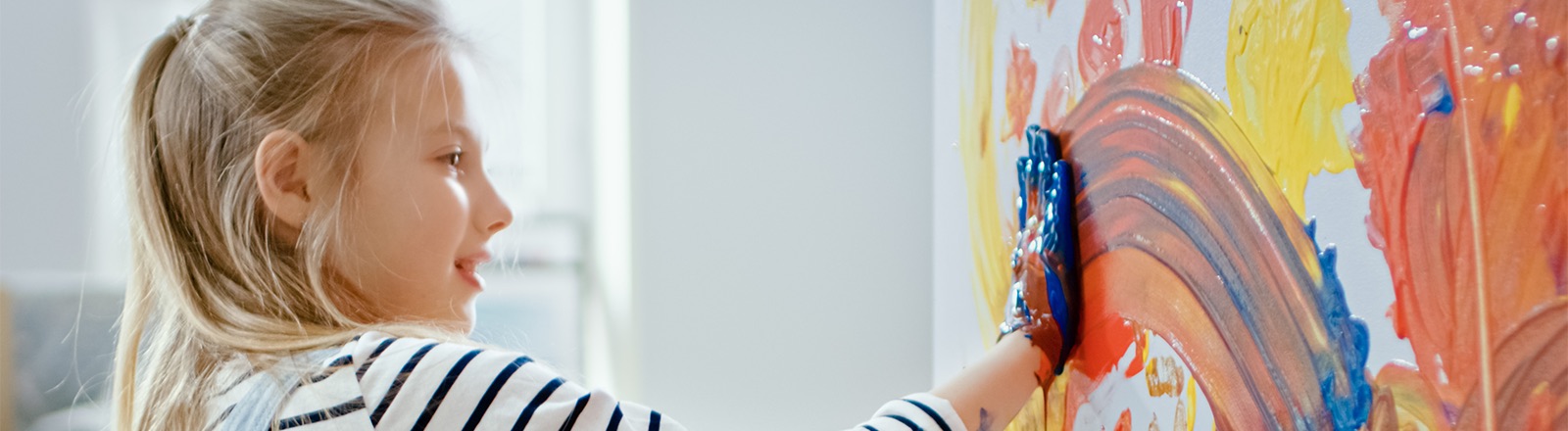
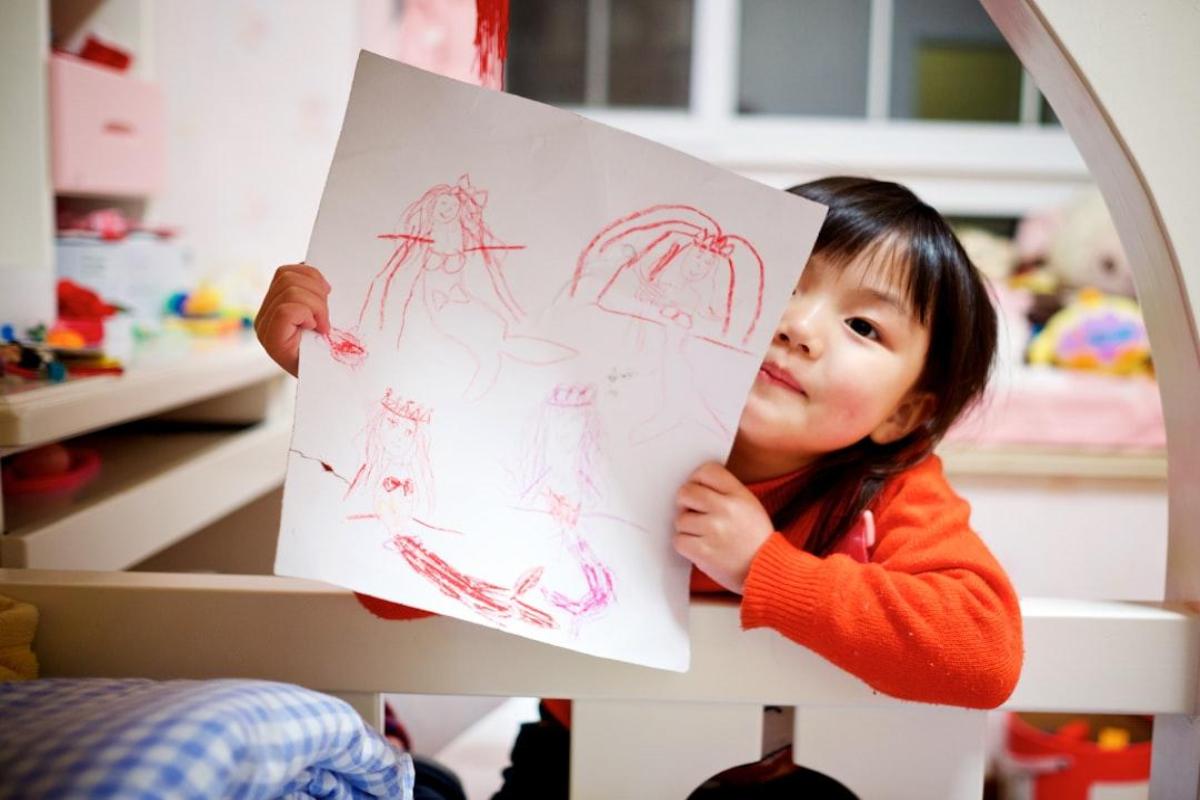
You observe your child sitting at their table, a felt-tip pen clutched in their small hand.
On the blank sheet of paper, energetic large circles intertwine, but suddenly, a sigh escapes: the drawing does not look like the image they have in mind. This budding frustration actually hides a beautiful promise of growth. At age six, their mind awakens to a new perception of space, depth, and everyday details. How can you support this desire to create without extinguishing the spark of their imagination? It is precisely at this pivotal age that guided learning makes perfect sense.
What is the ideal age to start learning how to draw?
Enrolling a young creative in a drawing class for kids from age six supports their cognitive development and fine motor skills. A structured drawing class helps them overcome the frustration of scribbling. Later, this facilitates their transition toward narrative techniques like a comic book drawing class or manga.
How does drawing evolve in children starting from age 6?
What a joy it is to feel proud as you watch your child's face light up when they realize their hand can finally reproduce what their eyes see. Starting primary school marks the famous age of reason, a period of major graphic transformation. The student gradually leaves purely symbolic representations behind to explore visual realism. Choosing to join our visual arts studio helps them navigate this major transition with complete confidence.
The transition from scribbling to realistic representation
Before the age of six, drawn shapes remain essentially schematic. A simple circle topped with vertical lines represents a beloved character. Then, around age six, a spark occurs: your child begins to want to incorporate realistic proportions and minute details. It is the relief of finally being able to express themselves faithfully through images, a fascinating transition where intuitive scribbling gives way to figurative intent.
The development of fine motor skills and patience
At this pivotal age, hand-eye coordination refines in a spectacular way. Fingers are better positioned, and holding the pencil becomes much more confident. Your child learns to adjust their pressure on the lead to draw steady, precise lines. This new technical ease fuels their patience, allowing them to stay focused on their creation without feeling the fatigue of early years.
Why choose structured learning over free drawing?
While free creation remains essential for escape, it shows its limits as the child's expectations grow. Without methodological guidelines, a young artist can feel stuck by the gap between their fertile imagination and their technical execution skills. Structured teaching provides indispensable technical keys to progress serenely.
Channeling creativity without restricting it
Some parents fear that a rigid framework might stifle their child's natural spontaneity. Yet, true freedom of expression is born from technical mastery. Our artist-teachers offer a warm environment where perspective, shadow management, and color mixing are learned through stimulating games. Your young artist no longer suffers from physical limitations; they break free from them to bring their inner worlds to life.
Opening up to illustration and storytelling techniques
Telling a story in pictures requires a specific know-how that isolated practice alone cannot provide. Through progressive learning, children discover the art of designing expressive characters and organizing narrative speech bubbles. From the age of eight, fans of Japanese illustrations can also deepen their knowledge of specific graphic codes by joining our manga classes, an ideal space to share and perfect their style.
What are the concrete benefits of guided learning in a physical studio?
In an increasingly virtual daily life, learning visual arts in a physical studio offers irreplaceable benefits. In-person work allows a tactile relationship with materials that digital tools cannot match. Handling textured paper, mixing real gouache, and sharpening pencils foster a precious sensory anchoring for overall development.
The importance of in-person social interactions
Sitting around a large studio table, sharing doubts, and marveling at a neighbor's creation creates immediate connection. In our classrooms, children discover the power of collective emulation. By watching a classmate's movements, your child grows, learns to formulate constructive feedback, and develops valuable self-esteem within a supportive community.
The stimulating role of an artist-teacher
Behind every major breakthrough lies the attentive eye of a passionate educator. The teacher knows how to detect the exact moment when frustration sets in due to a stubborn perspective or a disproportionate face. With a gentle, precise gesture applied directly to the paper, they unblock the situation, transforming a moment of doubt into a wonderful learning opportunity.
How are our visual arts studios organized in Romandie?
Apolline offers a unique pedagogical approach to support the artistic development of young minds. Our weekly workshops cover drawing, painting, and illustration for children starting from age six. We operate in many municipalities in French-speaking Switzerland to offer high proximity to families.
Local locations and affordable rates
To offer every family great proximity, our visual arts studios are located in the heart of many Swiss cities, including Geneva, Etoy, Lausanne, Montreux, Vevey, Sion, Yverdon, Nyon, Neuchâtel, and Fribourg. We have designed options tailored to school schedules to support each child in a serene way:
- 60-minute weekly class: From 79.- CHF per month.
- 90-minute weekly class: From 99.- CHF per month.
Workshops and camps during school holidays
During school holidays, our school comes alive with themed holiday workshops and camps starting at 290.- CHF per week. These artistic escapes take place in the main cities of Romandie and are divided by age group:
- Mini Art Explorers (4 to 7 years old): A playful and sensory immersion to awaken the curiosity of the youngest.
- Drawing, Painting & Illustration (6 to 10 years old): A technical journey to introduce them to the joys of color and shape.
- Comic Book Drawing & Manga (8 to 16 years old): An exciting universe dedicated to graphic storytelling and character creation.
- Musical Theatre (8 to 14 years old): A complete workshop combining body movement, acting, and singing.
In parallel, we offer drama classes and musical theatre starting from age 6, taught in Lausanne, Yverdon, and Etoy (monthly rates of 79.- CHF for 60 minutes, 89.- CHF for 75 minutes, and 99.- CHF for 90 minutes). For music lovers, our music classes (singing, guitar, piano, drums, bass) welcome children from age 4, exclusively at our Lausanne center, starting at 111.- CHF per month.
FAQ
What is the ideal age to enroll my child in a weekly drawing workshop?
Six years old is the perfect age to start our weekly visual arts workshops. This is the period when fine motor skills and spatial analysis come together, giving your child the tools they need to overcome scribbling frustration and flourish completely.
Do you offer introductory options for children under 6?
Yes. While our weekly visual arts workshops are designed for children from age six, we warmly welcome budding artists aged four to seven during our school holiday camps with our "Mini Art Explorers" early-learning program.
Is it possible to attend these drawing workshops remotely or online?
No, all our visual arts classes take place exclusively in person in our studios across Romandie. This choice ensures close, caring support, fosters rich social exchanges, and allows children to physically manipulate textures and artistic tools.
What are the rates for your weekly drawing workshops?
Our visual arts workshop subscriptions start at 79.- CHF per month for a 60-minute weekly session. To go further, we also offer 90-minute sessions at 99.- CHF per month.